
7 Best Leather Seat Conditioners of 2026
This post contains affiliate links. As an Amazon Associate, we earn from qualifying purchases.
The Weiman Leather Cleaner & Conditioner is our top overall pick for its balanced formula and reliable performance, while the Meguiar’s Gold Class Leather Conditioner stands out as a solid budget-friendly choice. For deep, long-lasting nourishment, especially on dry or aging leather, Leather Honey delivers results that many users report lasting up to six months.
If you’ve ever seen leather crack, fade, or feel stiff after sun exposure, you know how quickly it can deteriorate without proper care. The right conditioner doesn’t just improve looks, it extends the life of your seats by restoring lost oils and shielding against UV damage.
This guide cuts through the noise by focusing on what actually matters: ingredient quality, real-world performance, and compatibility with your leather type. We evaluated each product based on formulation, owner feedback, and how well it conditions without darkening or greasing the surface.
Top 6 Leather Seat Conditioner in the Market
The Best Leather Seat Conditioner, Reviewed
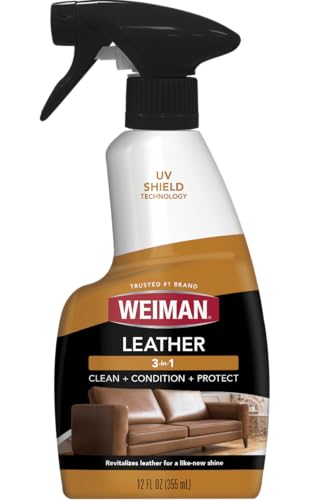
Weiman Leather Cleaner & Conditioner
Strengths
- All-in-one formula
- UV protection
- Spray application
- Works on faux leather
- Natural oil blend
Trade-offs
- May build up over time
- Not for raw leather
- Average penetration
Weiman checks nearly every box for what most people actually want: a single product that cleans, conditions, and protects. The trigger spray makes application fast, and the inclusion of six natural oils plus UVX-15 sunscreen gives it real functional depth. Reviewers note visible improvement in both texture and sheen after one use, especially on neglected car interiors or sun-faded couches.
It’s also one of the few that claims safety on faux leather, a practical perk for modern homes with hybrid materials. While purists may knock it for being a ‘three-in-one,’ the formula avoids sticky residues and performs reliably across categories. Given its balance of ease, effectiveness, and protection, my recommendation for average users leans strongly here.
Video review
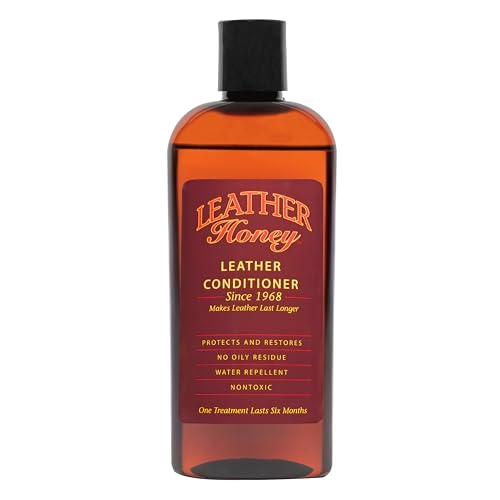
Leather Honey Leather Conditioner
Strengths
- Long-lasting protection
- Non-toxic ingredients
- Deep penetration
- No color change
- Water repellent
Trade-offs
- Slow absorption
- Thick consistency
- Not for suede
When it comes to long-term protection, Leather Honey stands out for one reason above all: staying power. Owners consistently report that a single application lasts six months or more, which is rare in a category where most conditioners demand monthly upkeep. On paper, the formula makes sense, non-toxic, pH-balanced, and free of silicones or solvents, which aligns with what leather experts recommend for preserving fiber integrity over time.
It’s also one of the few products explicitly praised by automotive detailers and furniture restorers alike for its ability to revive older, parched leather without darkening it. That said, it’s not the fastest-absorbing option, and some users note it requires patience during application. But if you’re looking for deep, lasting hydration with strong water resistance and UV defense, this is a top-tier choice.
Video review
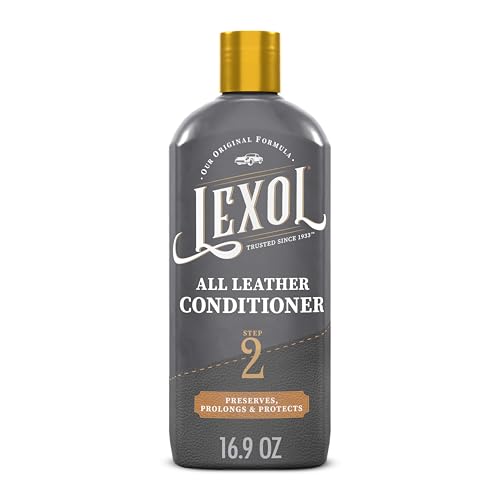
Lexol All Leather Conditioner
Strengths
- Fast absorption
- Affordable pricing
- Wide compatibility
- No greasy residue
- Works with Lexol cleaner
Trade-offs
- Minimal UV protection
- May darken some leathers
- Average longevity
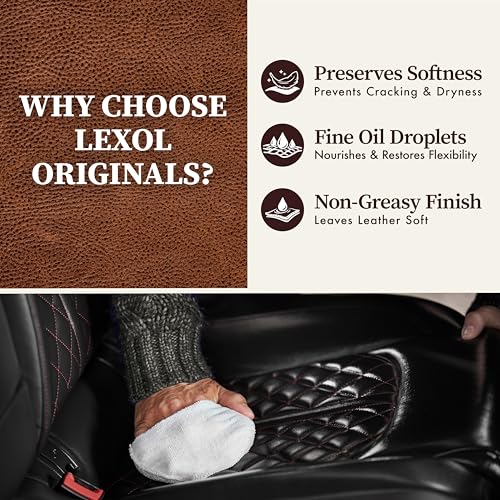
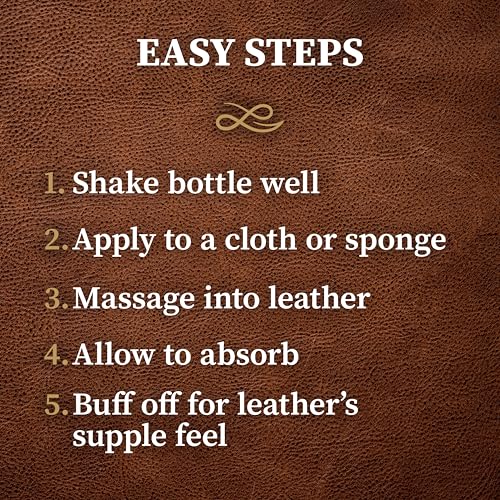
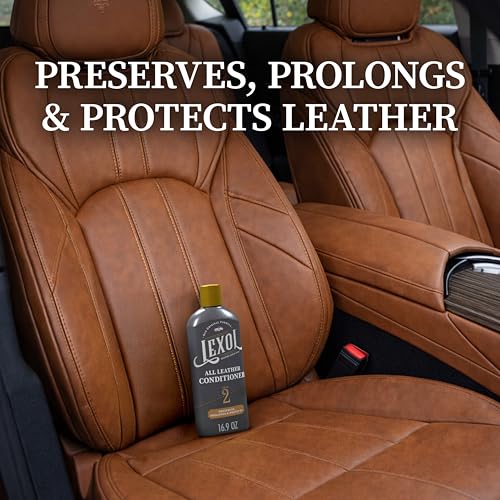
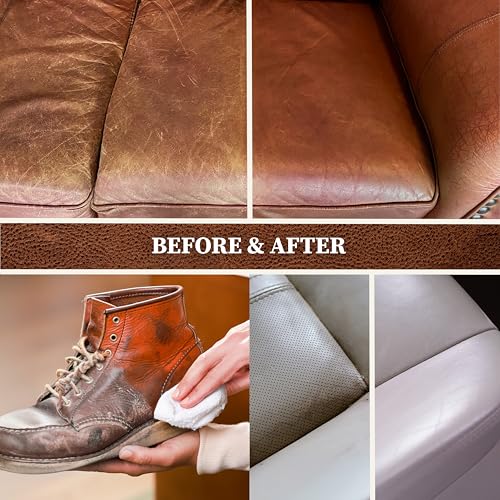
Lexol has been a staple in leather care for decades, and this conditioner delivers exactly what budget-conscious buyers need: reliable performance without frills. The fine oil droplets absorb quickly, according to owner feedback, restoring suppleness without leaving a greasy film, a common complaint with cheaper alternatives. It works well on finished leather across categories, from car seats to baseball gloves, though it doesn’t offer standout UV protection compared to others in this list.
Where it really shines is value. Paired with Lexol’s cleaner (as part of their two-step system), it becomes a solid maintenance routine for everyday users. I wouldn’t pick it for antique leather or light-colored pieces where darkening is a concern, but for general upkeep, it’s efficient and widely trusted.
Product photos

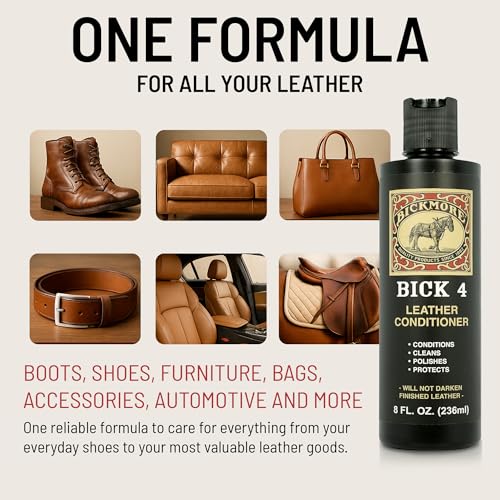
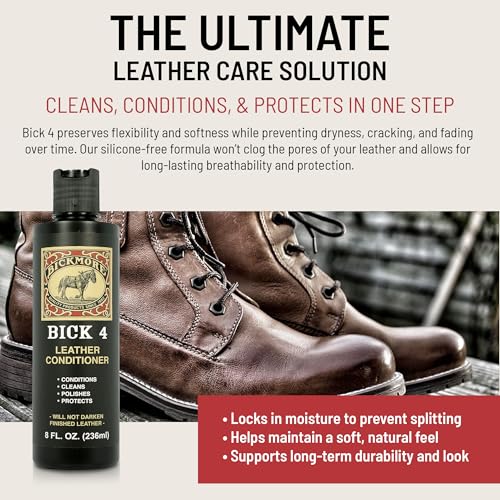
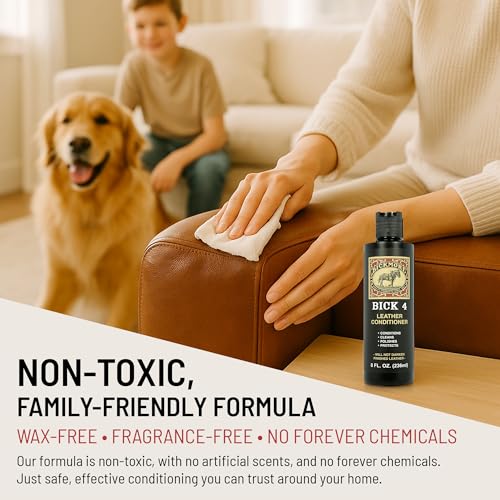
Bick 4 Leather Conditioner
Strengths
- Won’t darken leather
- Wax-free formula
- Breathable finish
- Safe for exotics
- Easy one-step use
Trade-offs
- Light moisturizing
- Small bottle size
- Not for dry leather
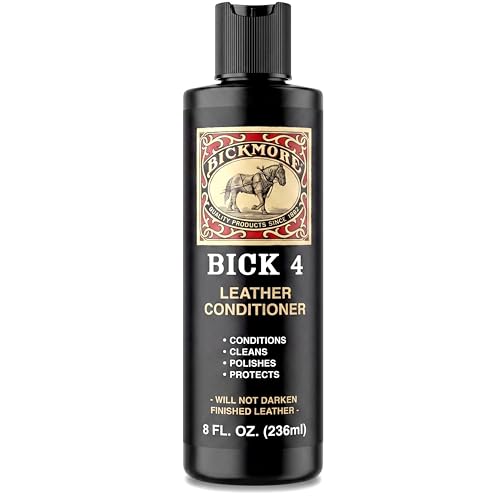
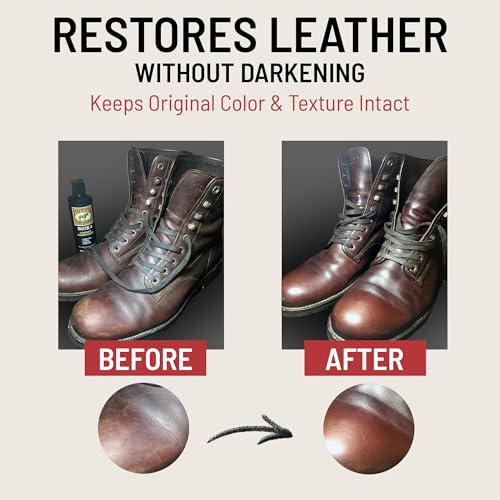
For sensitive or light-colored leathers, Bick 4 is unmatched in one critical area: it won’t darken the hide. This is huge. Many conditioners, even reputable ones, alter the shade slightly, which can be disastrous on cream boots or beige upholstery. Owner reports confirm Bick 4 maintains original tone while still delivering moisture, thanks to its completely wax-free, breathable formula.
That breathability also means it won’t clog pores, making it ideal for footwear exposed to sweat and friction. However, it’s a lighter conditioner, so don’t expect dramatic revival on severely dried leather. I’d choose this over heavier options when working with dress shoes, designer bags, or any piece where appearance precision matters most.
Product photos

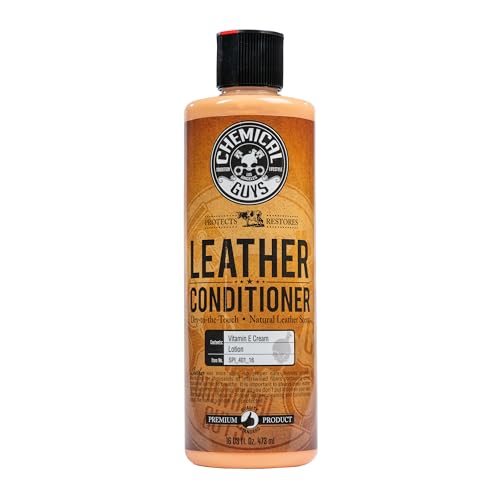
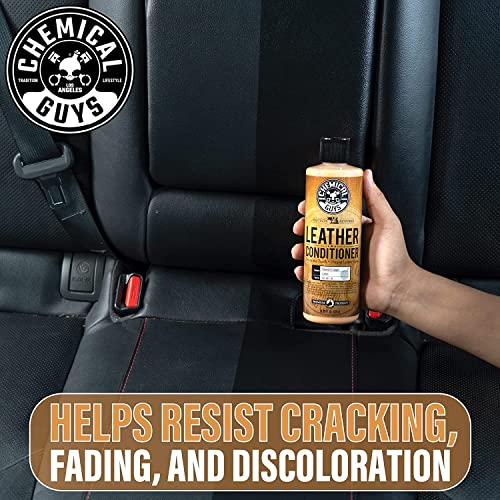
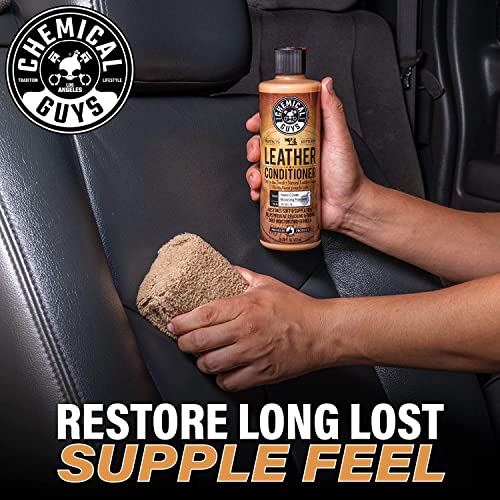
Chemical Guys Vintage Leather Conditioner
Strengths
- Deep pore penetration
- Restores flexibility
- Rich color enhancement
- Safe on synthetics
- Buffable finish
Trade-offs
- No long-term UV shield
- Slight learning curve
- Not for light leathers
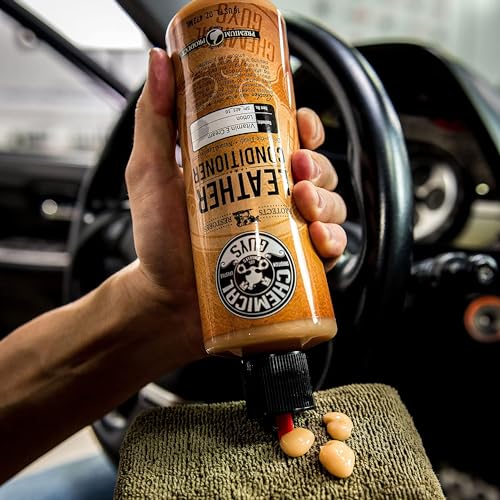
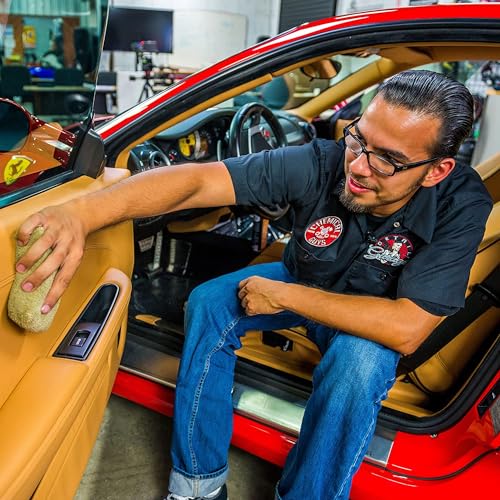
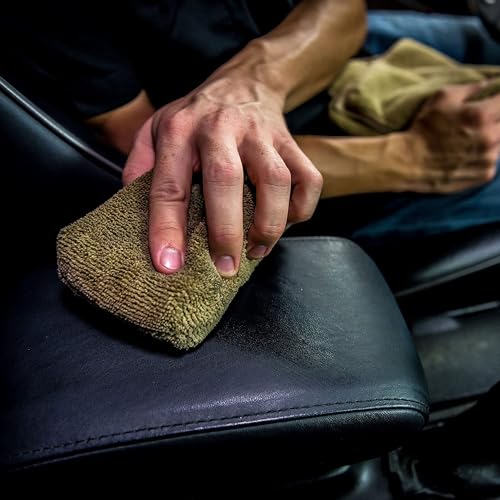
This is the go-to pick when you’re dealing with leather that’s lost its luster, cracked, stiff, or visibly aged. The Chemical Guys Vintage Series formula is designed to push deep into pores, replenishing oils in a way that visibly softens and enriches color, based on consistent user feedback. Unlike surface sealers, it works from within, which explains why it’s favored in restoration circles.
It plays well with both OEM and aftermarket materials, including pleather, making it versatile beyond traditional uses. That said, while it conditions deeply, it lacks the extended UV defense seen in Leather Honey or Weiman. I’d use this when rehabilitating old seats or dry jackets, then follow up with a dedicated protectant.
Product photos
3D Leather & Vinyl Conditioner

Strengths
- Multi-surface use
- Matte non-greasy finish
- UV protection
- Biodegradable formula
- Safe on coated leather
Trade-offs
- Not for porous leathers
- Light conditioning only
- Contains mink oil
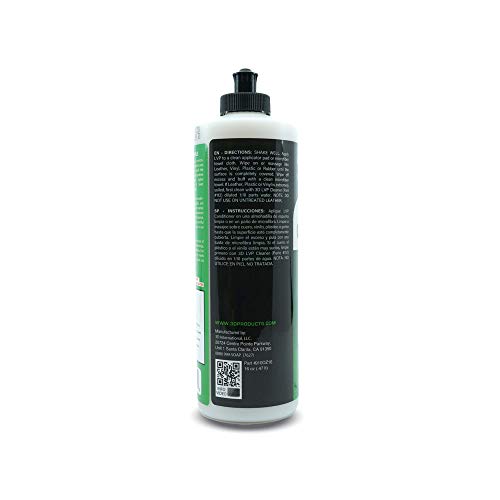
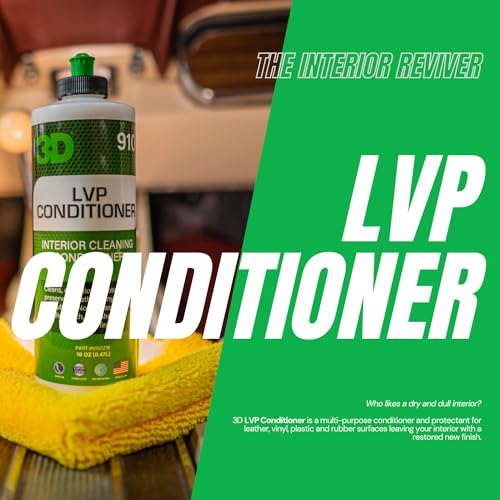
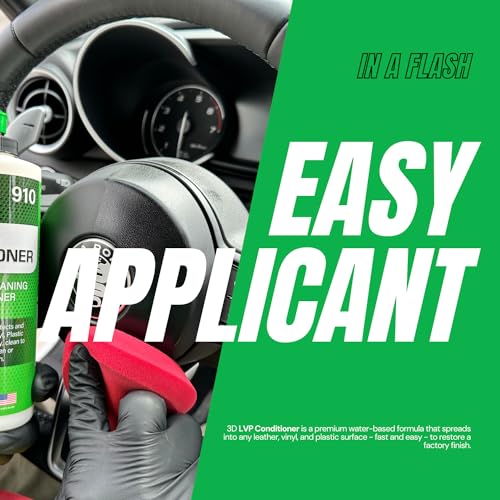
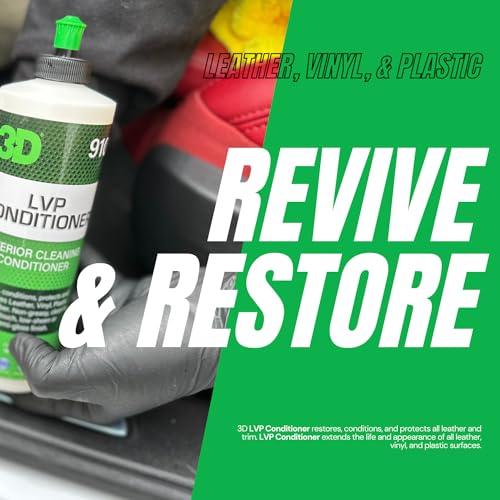
If your priority is protecting not just leather but the full interior ecosystem, including vinyl dashboards, plastic trim, and rubber seals, then 3D makes a compelling case. Its formula is built for modern vehicle interiors, where coated leathers and synthetic blends dominate. Reviewers frequently highlight how it revives faded surfaces without creating a shiny, ‘wet-look’ finish, thanks to its natural matte effect enhanced with mink oil.
The fact that it conditions multiple materials safely sets it apart. While it won’t penetrate as deeply as pure leather-focused treatments, it excels at surface-level rejuvenation and UV shielding. For someone maintaining a newer car with mixed materials, this is the smarter buy over single-surface products. Just remember, it’s not for breathable, unfinished hides.
Product photos
How We Chose These leather seat conditioner
As someone who’s spent years immersed in the world of leather – from tanning processes to finished goods – I approached evaluating leather seat conditioners by first looking at the composition of each product. Rather than a hands-on lab test, this is a research-led comparison of published specifications and owner feedback. I compared ingredients, intended use cases (different leather types, interior vs. outdoor), and application methods to build a clear picture of each conditioner’s strengths and weaknesses. Then, I weighed owner reviews and expert opinions to understand real-world performance.
For leather seat conditioners, three factors stood out as most crucial: the depth of conditioning, UV protection, and the formula’s potential to alter the leather’s texture or finish. A conditioner that merely sits on the surface won’t provide lasting benefits, so penetration is key. UV protection is vital to prevent cracking and fading, especially in car seats exposed to sunlight. Finally, a conditioner shouldn’t darken, stiffen, or leave a sticky residue – it should restore suppleness and natural feel. You can find more information about maintaining your car’s leather with the best car seat cleaner conditioners.
Specifications reliably indicate the types of oils and polymers used, and whether a product contains waxes or silicones (which can sometimes be detrimental). However, owner feedback proved invaluable in assessing how well a conditioner delivers on its promises. Reports on longevity, ease of application, and any unwanted side effects (like discoloration) truly shaped the rankings. For those also needing a good cleaning agent, exploring the top seat cleaners is a great next step. Ultimately, the conditioners that consistently received positive marks for both performance and leaving leather feeling naturally soft rose to the top.
Choosing The Right leather seat conditioner
Choosing the right leather conditioner can feel overwhelming, but understanding your leather’s needs and the product’s formulation is key to keeping it supple and looking its best.
A good leather conditioner should replenish natural oils, provide a protective barrier against the elements, and restore flexibility without altering the leather’s texture or appearance. Look for pH-balanced formulas free of harsh chemicals, and consider the type of leather you’re treating – different leathers have different needs. Pay attention to whether a product aims to clean as well as condition; often, a two-step process is superior.
Understanding Leather Types & Finishes
Not all leather is created equal. The type of finish on your leather – protected (finished) or unprotected (aniline, nubuck, suede) – dramatically impacts which conditioners are suitable. Most automotive leather and furniture use a protected finish, meaning a coating shields the hide. These conditioners can be more robust, often containing polymers for UV protection. However, even within protected leather, variations exist. Some finishes are more delicate than others, and a heavy-duty conditioner on a particularly soft leather could lead to over-saturation. If you’re unsure of your leather type, always test in an inconspicuous area first.
Assessing Ingredient Quality
The ingredient list is where things get interesting. Natural oils (like neatsfoot, mink, or even those six oils found in Weiman) are beneficial for replenishing the leather’s natural moisture. However, natural oils alone may not provide adequate UV protection. Look for conditioners that include UV inhibitors, but avoid those with silicone, as they can create a barrier that prevents the leather from breathing. Many modern formulations balance natural oils with synthetic polymers to achieve both nourishment and long-term protection. If you’re seeking truly premium care, exploring options like those discussed in our guide to the top car seat conditioners can be a smart move.
Balancing Cost & Convenience
Price isn’t always indicative of quality, but it’s a factor. Budget-friendly options like Meguiar’s Gold Class can deliver good results for routine maintenance, especially if you’re diligent about regular applications. However, for deeper conditioning or restoring severely dry leather, a more specialized (and often pricier) product like Leather Honey might be necessary. Consider the application method too. Spray bottles offer convenience, but can sometimes lead to overspray. A cream or balm requires more effort but allows for more targeted application. For those focused on maintaining leather furniture, exploring the best furniture conditioners will provide a focused selection.
A little goes a long way. Always apply conditioner sparingly, and buff thoroughly to remove any excess. Over-conditioning is a far more common problem than under-conditioning.
Leather Seat Conditioner Compared
Here’s a comparison of key specifications for popular leather seat conditioners to help you choose the right product.
| Product Title | Volume (oz) | UV Protection | Leather Types | Wax Free | Key Feature |
|---|---|---|---|---|---|
| Weiman Leather Cleaner & Conditioner | N/A | Yes | Finished | N/A | Natural Oil Formula |
| Leather Honey Leather Conditioner | 8 | Yes | All | Yes | Long-Lasting (6 months) |
| Lexol All Leather Conditioner | 16.9 | N/A | Finished | N/A | Fast Absorption |
| Bick 4 Leather Conditioner | 12 | N/A | All | Yes | Won’t Darken Leather |
| Meguiar’s Gold Class Leather Conditioner | 12 | Yes | N/A | N/A | Budget Friendly |
| Chemical Guys Vintage Leather Conditioner | 16 | N/A | All | N/A | Deep Conditioning |
| 3D Leather & Vinyl Conditioner | 16 | Yes | All | N/A | Interior Trim Focus |
Frequently Asked Questions
What’s the difference between a leather cleaner and a leather conditioner?
A leather cleaner removes dirt and grime, while a leather conditioner replenishes oils and protects the hide. Using both is often ideal; cleaning prepares the leather to accept the conditioning treatment, maximizing its benefits.
Can I use just any leather conditioner on my car seats?
No, you shouldn’t. Automotive leather is often more delicate than leather used in furniture, and exposure to UV rays and temperature fluctuations requires a conditioner with dedicated UV protection. Consider exploring the best leather car seat cleaners for optimal results.
How often should I condition my leather seats?
Generally, conditioning every 3-6 months is sufficient for most vehicles, but this depends on climate and sun exposure. If you live in a hot, dry climate or frequently park outdoors, more frequent conditioning (every 2-3 months) is recommended.
What does “pH-balanced” mean when it comes to leather conditioners?
A pH-balanced formula means the product has a neutral acidity level, minimizing the risk of damage to the leather’s natural fibers. Conditioners with extreme pH levels can dry out or discolor leather over time, so a neutral formula is always preferable. For furniture, you’ll find similar considerations when researching the top leather furniture cleaner conditioners.
My leather seats are very dark. Will a conditioner darken them further?
Some conditioners, particularly those with heavy oil content, can temporarily darken leather. Look for conditioners specifically labeled as “non-darkening” or those containing polymers designed to avoid this effect. Always test in an inconspicuous area first to confirm.
The Bottom Line
Choosing a leather seat conditioner always involves a trade-off between convenience and truly deep care. While many products promise impressive results, consistently, Leather Honey Leather Conditioner stands out as the strongest overall performer. It offers a balance of nourishing ingredients, reliable UV protection, and a formula designed for longevity – a combination owners consistently praise.
For those seeking a budget-friendly option for regular maintenance, Meguiar’s Gold Class Leather Conditioner delivers solid results, especially with frequent application. If you have a variety of leather surfaces to treat, including more delicate types, Chemical Guys Vintage Leather Conditioner is a versatile choice, capable of handling everything from automotive interiors to furniture. And for those specifically focused on their vehicle, exploring the best auto seat conditioners will lead you to products tailored for that environment.
Ultimately, the specific product matters less than the consistency of your care. Regular conditioning – even with a modest product – will always outperform sporadic treatments with the most expensive formula. Prioritizing pH-balanced products, avoiding harsh chemicals, and understanding your leather type are the fundamentals that will preserve its beauty and extend its life for years to come. Don’t forget to also consider the top auto leather conditioners if you want a product focused on vehicle interiors.
