Understanding Kangaroo Leather: Its Strength and Structure
This post contains affiliate links. As an Amazon Associate, we earn from qualifying purchases.
This post contains affiliate links. As an Amazon Associate, we earn from qualifying purchases.
Kangaroo leather is a lightweight yet exceptionally strong material derived from kangaroo hides, prized for its unique collagen fiber structure that offers up to 10 times the tensile strength of cowhide and retains a high percentage of that strength even when split thinly.
That structural advantage is the whole game. It explains why a pair of century-old kangaroo leather shoes can look cleaner and less creased than calfskin shoes from the same era, and why the material finds a home in high-abrasion applications.
The rest of this guide explains the reasons for that strength, its current applications, and the practical trade-offs involved in using or purchasing it. By the end, you’ll be able to look past marketing terms and understand exactly what makes this leather distinct.
Key Takeaways
- Kangaroo leather’s strength comes from a uniform, parallel arrangement of collagen fibers, unlike the crisscrossing pattern in cowhide.
- When split to 20% of its original thickness, it retains 30–60% of its original tensile strength; calfskin retains just 1–4%.
- Its lightweight and abrasion-resistant nature made it a staple for performance football boots and motorcycle gear, though major brands are now moving to synthetic alternatives.
- Working with kangaroo leather demands sharp tools due to its density, and it can be more expensive and less available than common bovine leathers.
- The long-term evidence from vintage goods suggests superior aging characteristics compared to other leathers, a point often overlooked in modern comparisons.
The Tensile Strength Difference by the Numbers
The most cited fact about kangaroo leather is its strength. But “stronger” is a vague term. The concrete numbers from Australian Commonwealth Scientific and Industrial Research Organisation (CSIRO) studies turn the claim into something you can measure.
Kangaroo leather has 10 times the tensile strength of cowhide and is about 50% stronger than goatskin. Tensile strength measures how much pulling force a material can withstand before breaking. For leather, that translates directly to tear resistance and longevity under stress.
When split to 20% of its original thickness, kangaroo leather retains 30 to 60% of its original tensile strength. Calf leather split to the same thickness retains only 1 to 4%. This retention capability is unique and is the reason kangaroo leather can be used so thinly without sacrificing durability.
This isn’t a small margin. It’s a complete recasting of what’s possible with a split leather. A craftsman can use a featherweight kangaroo skin for a glove lining or a dress shoe upper and still get performance that would require a much thicker, stiffer piece of calfskin.
| Leather Type | Tensile Strength vs. Cowhide | Strength Retention When Split to 20% Thickness | Common Comparative Use |
|---|---|---|---|
| Kangaroo | 10x stronger | 30–60% retained | High-performance athletic footwear, motorcycle suits |
| Goatskin | 1.5x stronger | Not widely documented; lower than kangaroo | Gloves, luxury linings, delicate goods |
| Calfskin | Baseline (1x) | 1–4% retained | Fine dress shoes, wallets, briefcases |
The practical takeaway? If you see a product billed as “ultra-lightweight kangaroo leather,” you don’t have to equate thin with delicate. In this case, thin is a feature enabled by its specific biology.
The Unique Fiber Structure That Explains Its Strength
So why is it so strong? The answer is in the hide’s microstructure, a perfect example of how the leather tanning process starts with the raw material’s innate properties.
Bovine hide (cow or calf) is a complex weave. Its collagen fiber bundles run in many directions, often at sharp angles to the skin’s surface. It also contains sweat glands, erector pili muscles, and varying levels of elastin. These are natural weak points—spots where a tear can start under tension.
Kangaroo hide is different. Studies of its morphology show a highly uniform orientation of fiber bundles, all running parallel to the skin surface. No sweat glands. No erector muscles. Elastin is evenly distributed throughout. This structure is simpler and more efficient.
Think of it like plywood versus a solid block of wood with knots. The plywood (analogous to cowhide) has layers glued in alternating directions for general stability, but a flaw between layers can cause a split. The solid, knot-free block (kangaroo) has a consistent grain direction, making it remarkably resistant to splitting along that same plane.
This structural uniformity explains both the high initial strength and the phenomenal retention when split. Splitting cowhide cuts across many of those angled fibers, catastrophically weakening the material. Splitting kangaroo leather mostly just reduces the number of parallel fiber bundles, leaving the remaining structure largely intact.
Where You’ll Find Kangaroo Leather Used Today
The combination of high strength, light weight, and good flexibility made kangaroo leather a natural fit for specific high-stress applications. Understanding these uses shows you what the material is genuinely good at, beyond abstract specs.
Performance Athletic Footwear: For decades, the gold standard for high-end soccer (football) cleats was kangaroo leather. It molded to the foot quickly, provided excellent touch and ball feel, and withstood the abrasion of turf and repeated kicking. Brands like Adidas and Nike featured it in their top-tier models. The same properties made it a choice for lightweight baseball gloves and boxing gloves.
Motorcycle Apparel: In protective motorcycle jackets and pants, abrasion resistance is critical. Kangaroo leather’s density and strength meant it could slide on pavement longer before wearing through, compared to thicker cowhide. This made it a premium option in race-spec gear.
Whips and Traditional Goods: The ability to be cut into thin, strong strips made it the traditional material of choice for bullwhips and stock whips. Its flexibility and durability are perfect for the application.
A Note on the Current Shift: In recent years, a significant ethical and branding shift has occurred. Major sportswear brands, including Adidas, Nike, and Puma, have announced they are phasing out kangaroo leather in favor of synthetic, bio-based, or recycled alternatives. This is driven by animal welfare concerns and consumer pressure. So, while vintage and some specialty gear will feature it, its use in mass-market athletic shoes is declining. For a deeper look at how different tanning methods compared, this shift away from animal leathers is a major modern consideration.
The Practical Trade-Offs: Cost, Availability, and Workability
 If kangaroo leather is so remarkable, why isn’t everything made from it? The answer lies in three practical constraints that every maker or buyer weighs.
Cost and Availability: Kangaroo leather is a niche material. It comes primarily from Australia, and the hides are smaller than bovine hides. This limited, region-specific supply chain makes it more expensive. You might pay a significant premium per square foot compared to high-quality cowhide. For large projects, that math often doesn’t work.
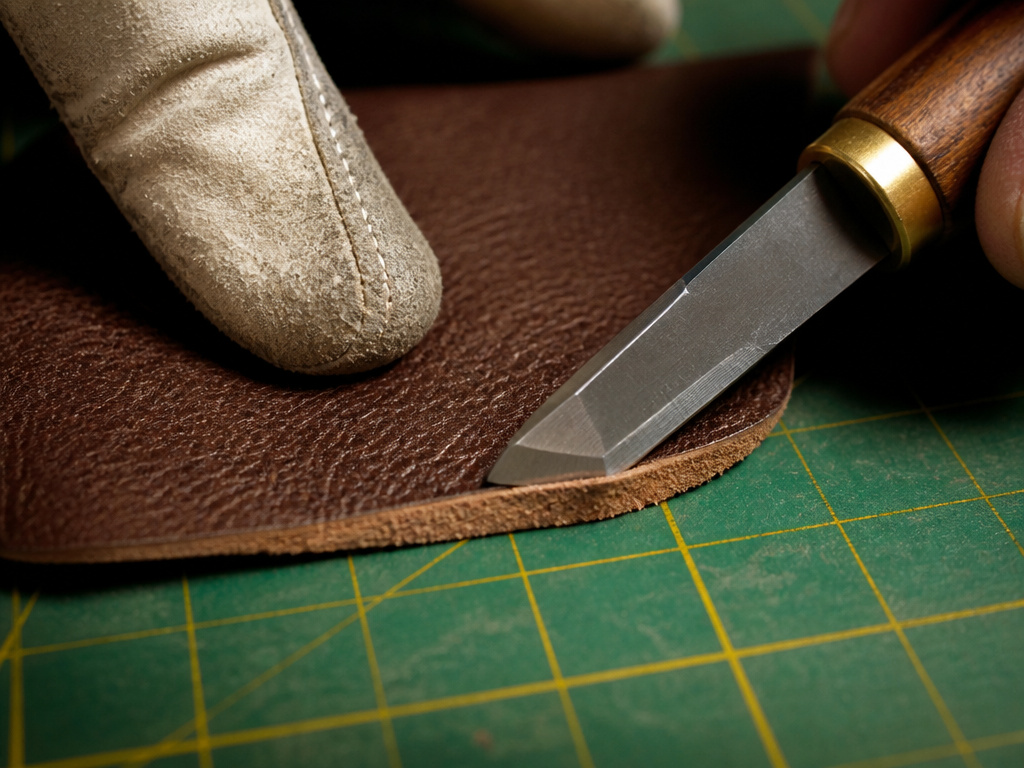
Working With It: Its density is a double-edged sword. It’s durable in use, but that also means it requires sharp tools. A dull skiving knife will drag and tear rather than cut cleanly. A punch needs to be driven cleanly through the parallel fibers. This demands a higher skill level and well-maintained equipment from the craftsman. For someone learning how to test leather quality, the hand-feel of kangaroo is distinct—firm yet supple, with a tight, fine grain of leather.
Ethical and Sourcing Considerations: As mentioned, the sourcing is controversial. Kangaroos are wild-harvested in Australia under government management plans, a practice supported by some ecologists as more sustainable than cattle farming but heavily criticized by animal rights groups. This ethical dimension is now a primary driver for brands seeking alternative materials.
Where this goes sideways: Choosing kangaroo leather for a large upholstery project based solely on its strength specs. The cost per square foot and the smaller hide sizes make it economically impractical compared to bovine or even high-quality synthetic alternatives, which are engineered for that specific use case.
For the hobbyist or custom maker, the decision often comes down to a specific need that only this leather’ strength-to-weight ratio can fulfill. Otherwise, the hurdles of cost and sourcing lead most to other materials.
How It Compares to Other Specialty Leathers
 Kangaroo leather sits within a family of strong, lightweight leathers. Knowing how it stacks up helps clarify its niche.
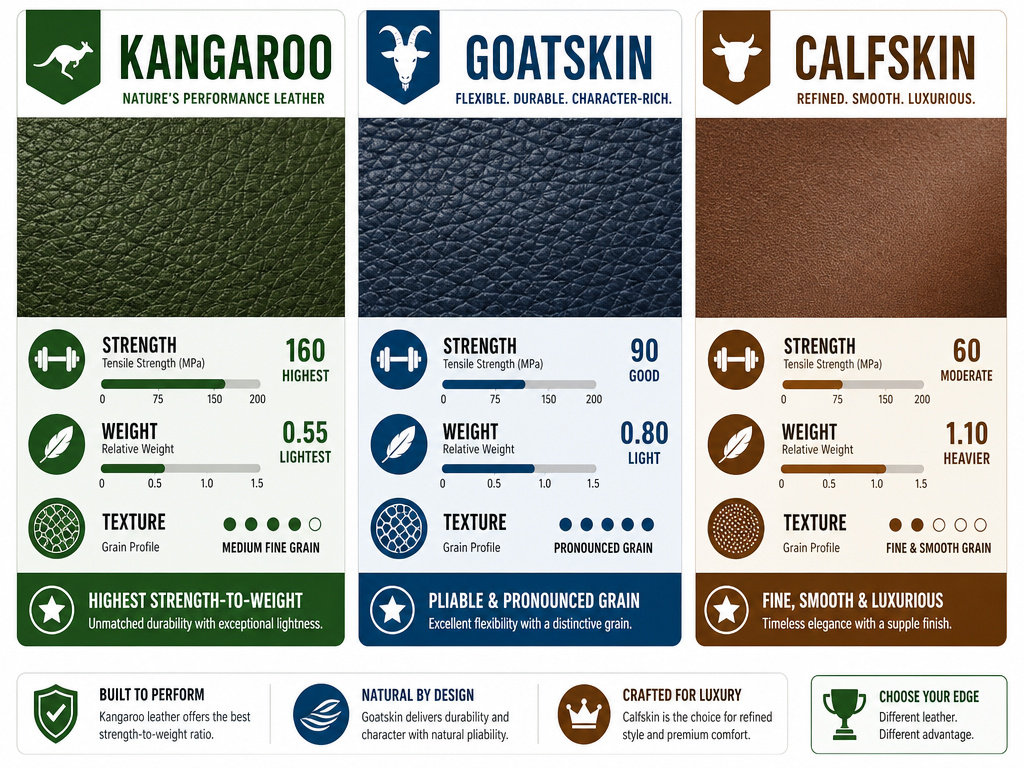
Kangaroo vs. Goatskin: Goatskin is also known for its high tensile strength and softness. It’s more pliable and often has a more pronounced grain pattern. Kangaroo is generally stronger and retains strength better when split, but goatskin is often more readily available and can be easier to work for certain applications like glove making. Both are excellent choices where weight matters.
Kangaroo vs. Calfskin: This is the classic comparison. Calfskin is prized for its fine, smooth grain and uniform appearance. It’s the standard for luxury dress shoes and accessories. However, as the splitting data shows, it lacks the inherent structural strength of kangaroo. A calfskin shoe is a mark of traditional craftsmanship; a kangaroo leather shoe (where applicable) is a mark of performance engineering. The choice between them isn’t about quality, but about the priorities of the item.
Kangaroo vs. Synthetic Performance Materials: This is the modern battleground. Advanced microfiber synthetics, like those in modern athletic shoes, aim to replicate the lightweight moldability of kangaroo leather without the animal sourcing. They often surpass it in consistency, waterproofing, and color options. However, they lack the natural breathability, aging patina, and ultimate repairability of a natural material. The leather making process for synthetics is entirely different, focusing on polymer chemistry rather than vegetable tanning or chrome tanning.
Long-Term Durability and Care
The proof of any leather is in how it ages. Anecdotal evidence from vintage collectors and craftsmen is telling. Century-old kangaroo leather shoes and jackets often show less severe creasing and surface cracking than their bovine counterparts from the same era. The uniform fiber structure seems to distribute stress more evenly over time, leading to a gentler, more graceful wear pattern.
Caring for kangaroo leather follows the same principles as caring for any fine leather, but with an emphasis on its thinness. * Condition Sparingly: Its low fat content means it can benefit from conditioning, but its tight pores mean it’s easy to overdo it. Use a light hand with a leather cream or thin oil that meets the JIS K 6558 standard for leather care products. * Clean Gently: Use a damp cloth for surface dirt. Avoid harsh soaps or solvents that can break down the delicate surface. * Store Properly: Keep it out of direct sunlight and extreme heat, which can dry out any leather prematurely.
A recurring edge case I see is when someone conditions any leather too often, based on a schedule rather than need. This leads to a buildup that can clog pores. On a dense leather like kangaroo, that gummy residue is especially difficult to reverse and can stiffen the material. The leather will tell you what it needs—condition only when it feels dry to the touch.
Frequently Asked Questions
Is kangaroo leather ethical?
The ethics are debated. Proponents point to Australian government-regulated wild harvests, which some ecologists argue are more sustainable than cattle farming. Opponents highlight animal welfare concerns. Many major brands have now moved away from it due to this controversy, as noted in the Wikipedia entry on kangaroo leather.
Why is kangaroo leather so expensive?
Limited supply is the main reason. The hides come almost exclusively from Australia, are smaller than cowhides, and the material is in demand for specific high-performance uses. The cost per square foot is significantly higher than for bovine leathers.
Can kangaroo leather get wet?
Like all leather, it is not inherently waterproof. Water can stain it and, with prolonged exposure, damage the fibers. It can handle a light rain better than some leathers due to its tight structure, but it should be dried naturally and conditioned afterwards if it gets soaked.
Is kangaroo leather durable?
Yes, exceptionally so for its weight. Its documented high tensile strength and excellent abrasion resistance make it one of the most durable lightweight leathers available. Vintage examples often show less wear than comparable calfskin items.
What are the alternatives to kangaroo leather?
For athletic performance, brands now use advanced synthetic microfibers, recycled materials, and bio-based alternatives. For general leather goods, high-quality goatskin offers similar strength and softness, while calfskin provides a more traditional look and feel.
Before You Go
Kangaroo leather isn’t a magic material, but it is a uniquely engineered one—by nature. Its value isn’t in being universally better, but in being specifically superior for applications where maximum strength must come in a minimal package.
If you’re considering a product made from it, you’re buying into that specific performance legacy. You’re also navigating a material that is becoming more niche due to ethical debates and the rise of high-tech synthetics. Understand that trade-off.
For the maker, it’s a challenging but rewarding leather that demands respect and sharp tools. For the buyer, it’s a sign that the product was likely designed with pure function in mind, at least until very recently. In a world obsessed with assessing leather quality by broad terms, kangaroo leather reminds us that the real story is always in the specifics of the fiber, the stitch, and the hand that worked it.
