
What is Nappa Leather | The Classic Full-Grain Finish
This post contains affiliate links. As an Amazon Associate, we earn from qualifying purchases.
This post contains affiliate links. As an Amazon Associate, we earn from qualifying purchases.
Nappa leather is a generic term for a soft, smooth leather processed from the top-grain layer of hides, primarily calf, lamb, or goat. Originating from a 19th-century California tannery, its name now denotes a quality level of a particularly supple, full-grain leather rather than a specific tanning method. It can be finished as aniline, semi-aniline, or pigmented leather, balancing natural beauty against durability.
Let’s be clear about one thing: Nappa is a description of a material state, soft, fine, and made from the best part of the hide. That description has been stretched by marketing over 150 years.The Nappa you find in a luxury car seat and the Nappa on a high-end handbag share that core definition, but the finish on top of that leather makes all the difference in how it wears, feels, and ages.
What follows is a breakdown of that definition, its history, and the practical trade-offs between the three finish types that classify Nappa. You’ll know how to spot the real thing, why carmakers love it, and how to care for a piece so it lasts for decades.
Key Takeaways
- Nappa is a category, not a specification. Any soft, top-grain leather can be called Nappa, so the real information is in the finish: aniline, semi-aniline, or pigmented.
- It’s historically significant but not inherently superior. The 1875 “Nap-a-Tan” process was revolutionary for soft, waterproof leather, but modern Nappa is prized for its hand-feel and durability, not a single patented method.
- The softness comes from the hide selection and light processing. Calf, lamb, and kid goat hides are used because their fibers are finer and more flexible than mature cattle hide.
- Aniline-finished Nappa develops a patina; pigmented Nappa resists stains. This is the main choice you’re making, character versus easy care.
- Test it with a bend and a rub. A quality Nappa should feel uniformly supple when folded and should not show a whitish, waxy residue from excessive surface coatings on a white cloth rub test.
The Origin Story: More Than Just a California Place Name
The term “Nappa” comes directly from Napa, California. In 1875, a German immigrant tanner named Emanuel Manasse, working at the Sawyer Tanning Company, developed a new process for producing exceptionally soft, waterproof leather. He marketed it as “Nap-a-Tan.” The process was a leap in chrome tanning, allowing for industrial-scale production of leather that was both durable and pliable enough for gloves and fine clothing.
The success was so definitive that the name stuck as a descriptor for any leather of similar quality. As the Wikipedia entry on Nappa leather notes, the term became generic, used globally to denote a soft, high-quality leather. Today, when you see “Nappa leather,” it’s invoking that legacy of pliability and luxury, not a specific, secret recipe. The important evolution is that modern Nappa can be chrome-tanned or vegetable-tanned; the defining feature is the use of the premium, unscuffed top-grain layer.
What Actually Qualifies as Nappa Leather?
For a leather to legitimately be called Nappa, it must meet two concrete criteria. First, it must be made from the full-grain or top-grain layer of the hide, the outermost, densest, and most durable part. This is the layer that contains the hide’s natural grain structure, which includes pores, fine wrinkles, and other markings. Second, that grain surface must be finished smoothly. It is not sanded, buffed, or embossed to mimic another texture. The process celebrates the natural surface.
The hides used are typically from younger animals with finer, more tightly woven fiber structures. Calf, lamb, and kid goat are the most common. The result is a leather that is thin, often between 1.0 and 1.5 mm, yet remarkably strong for its weight. This combination of thinness and strength is what allows it to be so soft without sacrificing longevity. It’s the difference between a dense, fine silk and a coarse, thick canvas.
A true Nappa leather will have a grain pattern that is completely unique to that specific hide, visible under close inspection. This is a key difference from corrected-grain leathers, where an artificial grain is stamped onto the surface.
Nappa vs. “Nappalan” and Other Lookalikes
This is where marketing gets slippery. A product labeled “Nappa leather” should mean the grain side is presented. However, a material called “nappalan” exists, which is a split leather (the lower, fibrous layer) that has been coated with a plastic or heavy pigment to look smooth. It feels stiff initially and that coating cracks or peels with flexing. Another confusing term is “Nubuck,” which is top-grain leather that has been lightly sanded on the grain side to produce a velvety nap. It’s a cousin in quality but distinct in texture and care.
How to spot the difference: Perform a simple bend test. Pinch a small section and gently flex it. Genuine, well-finished Nappa will bend smoothly without creasing harshly or showing a stark, light-colored “break” line. Nappalan or heavily painted splits will feel boardy, and the finish may show fine cracks along the bend line almost immediately.
The Practical Trade-offs: Aniline vs. Semi-Aniline vs. Pigmented
Once you have a Nappa hide, the finish applied determines its performance and personality. This is the most critical decision for manufacturers and the most informative spec for buyers. The spectrum runs from completely natural to fully protected.
| Finish Type | Process | Look & Feel | Best For | Trade-off |
|---|---|---|---|---|
| Aniline | Dye penetrates fully; no surface pigment. | Warm, soft, natural. Grain is vivid and pores visible. | Luxurious furniture, high-end bags, jackets where patina is desired. | Shows scratches, stains, and watermarks easily. |
| Semi-Aniline | Light pigment layer over aniline dye. | Softer feel than pigmented; grain still visible. | Car interiors (like many Mercedes, BMW), frequently used furniture. | Balances durability and natural look. Less breathable than aniline. |
| Pigmented (Corrected Grain) | Heavy pigment and polyurethane topcoat. | Uniform color, cooler/warmer feel, grain pattern obscured. | High-traffic commercial furniture, aviation interiors, work shoes. | Highly stain/scuff resistant. Can feel plastic-like; no patina develops. |
The difference between aniline finishes often comes down to the level of protection desired. A high-quality aniline leather finish is the pinnacle of beauty but requires an owner who appreciates that leather will age and tell a story. A durable semi-aniline leather finish is the pragmatic choice for a family sofa or a daily-driver car seat, offering a good compromise. A durable pigmented leather coating is about maximum resilience, often at the expense of the material’s natural tactile qualities.
A First-Hand Finish Failure
Let me share what I’ve learned the hard way. Even with deep knowledge, it’s easy to skip a fundamental step. I once attempted to refresh a faded Nappa bag with a universal leather dye. The bag had an unknown factory finish. The dye was incompatible, causing the existing finish to wrinkle and peel in patches within hours. It was a total loss.
The lesson wasn’t about the dye’s quality. It was a failure to test on a scrap first. That’s a basic step I’d neglected in a hurry. With Nappa, especially older pieces, you must assume there’s a finish that may react badly. A small, hidden area is your testing ground. This is based on years of practical experience, sometimes relearned painfully.
Why the Automotive World Loves Nappa (And What That Tells You)
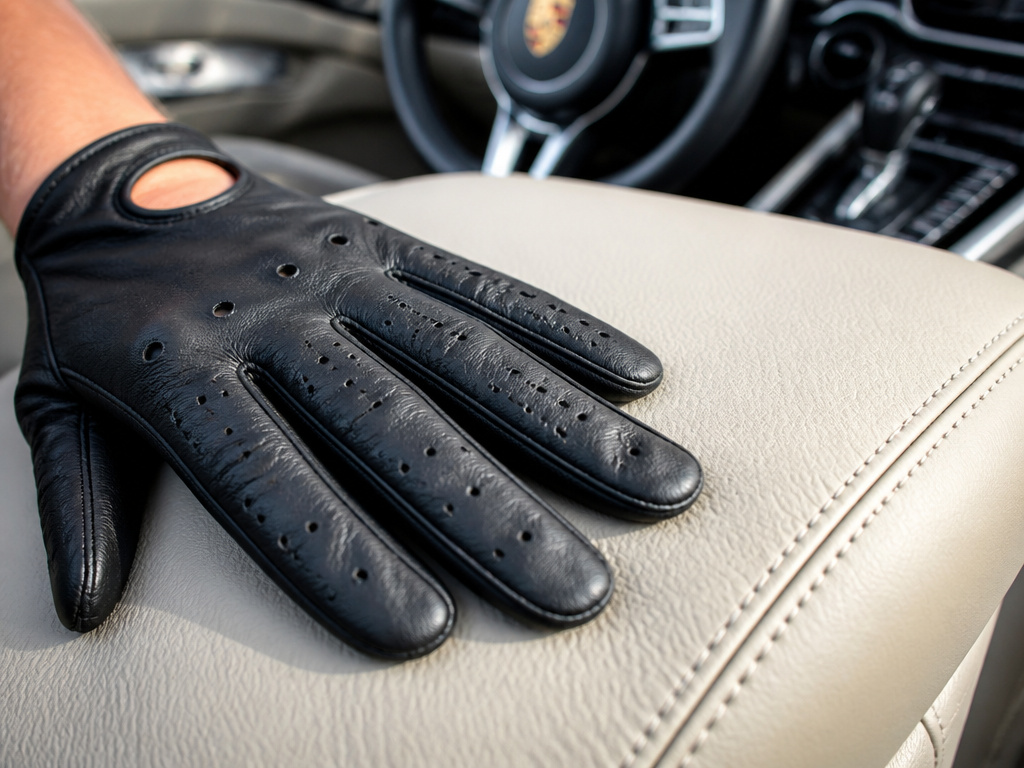
Open the brochure for any luxury sedan, and “Nappa leather seats” will be a headline feature. Brands like Mercedes-Benz, BMW, and Audi use it extensively. Why? The answer is in the sensory experience and tested durability.
Car seats demand a leather that can handle constant abrasion from entry/exit, UV exposure from sunroofs, and temperature swings from freezing mornings to sun-baked afternoons. Semi-aniline leather is the sweet spot for this. It retains enough natural character to feel premium while the pigment layer provides crucial protection against blue-jean dye transfer, sunscreen, and spilled coffee.
The technical specs matter here. For example, the CLASSIC NAPPA leather from manufacturer Leder-Fiedler is tested to international standards that a carmaker would require. Its tear strength is rated at ≥20 N/mm (per ISO 3377-1), and its color fastness to rubbing scores ≥4 on a grey scale after 500 dry rubs (per ISO 11640). These terms verify that the leather can survive years of use without failing. This is the level of assessing leather quality that goes into a premium product.
How to Care for Nappa Leather Goods
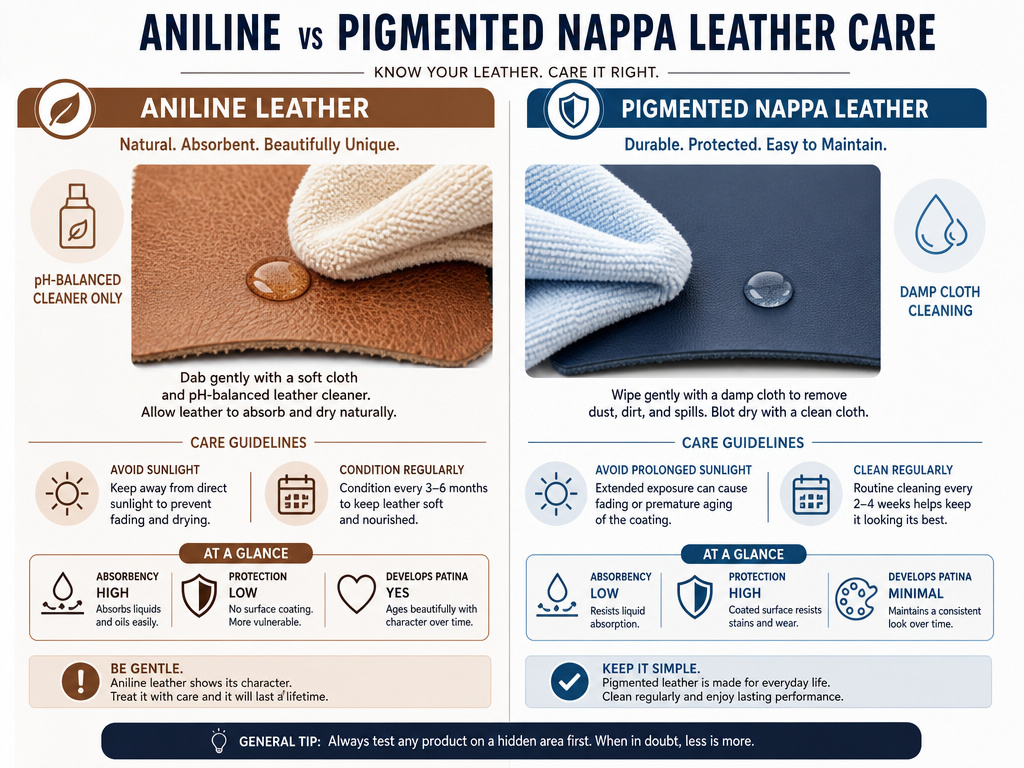
Care depends almost entirely on the finish. Treating a delicate aniline Nappa sofa like a pigmented one is a recipe for damage. Here’s a straightforward guide.
For Aniline or Semi-Aniline Nappa:
- Dust regularly with a soft, dry cloth. Grit is the enemy.
- Clean only when needed with a dedicated, pH-balanced leather cleaner. Apply to a cloth, not directly onto the leather.
- Condition sparingly. Thin Nappa doesn’t have the capacity to absorb heavy oils. Use a light, non-greasy conditioner like Leather Honey (on a test spot first) every 12-18 months. Over-conditioning will saturate the fibers and can lead to a sticky feel.
- Protect from direct sunlight to prevent fading and drying.
For Pigmented Nappa:
- Routine cleaning with a damp cloth is usually sufficient.
- A mild soap solution can tackle tougher grime.
- Conditioner is less critical but can be used annually to maintain flexibility.
Common mistake: Using saddle soap or mink oil on fine Nappa. Saddle soap is alkaline and will strip natural oils from aniline leather, drying it out. Mink oil is too heavy and will over-soften the thin hide, potentially weakening it.
Understand leather better to make confident choices. The leather will tell you what it needs. Pigmented finishes will bead water; aniline will absorb it immediately. Let that guide your care regimen.
Frequently Asked Questions
Is Nappa leather real leather?
Yes, authentic Nappa is real leather made from the top layer of an animal hide. The confusion arises because the term is sometimes misapplied to coated split leathers (“nappalan”). Always check for the full-grain characteristic and supple hand-feel.
Does Nappa leather crack?
All leather can crack if it dries out and loses its flexibility. However, high-quality Nappa, especially in a semi-aniline or pigmented finish, is remarkably crack-resistant due to its tight fiber structure and appropriate finish. Neglected aniline Nappa is more prone to cracking along stress points.
How can you tell good Nappa leather?
Perform two simple leather quality tests. First, the bend test: good Nappa bends smoothly without a loud cracking sound or a stark white crease line. Second, the rub test: rub firmly with a clean white cloth. Low-quality, overly coated leather will leave a whitish residue; high-quality Nappa should leave little to no transfer.
Is Nappa leather good for shoes?
It is excellent for fashion shoes, loafers, and dress boots where a soft, pliable upper is desirable. Its thinness makes it less ideal for heavy-duty work boots needing abrasion resistance. In shoes, it’s often given a pigmented leather finish for durability and easy polishing.
What’s the difference between Nappa and top-grain leather?
This is a scope issue. Top-grain leather is a broad category meaning the top layer of the hide is used. Nappa is a type of top-grain leather that is specifically softened and finished smooth. All Nappa is top-grain, but not all top-grain leather is soft enough to qualify as Nappa.
The Bottom Line
Nappa leather’s enduring appeal is about a consistent promise of a soft, fine, and durable material that starts with a premium hide. Your job as a buyer is to look past the “Nappa” label and ask the next question: what is the finish?
For a heirloom piece that will age with character, seek out aniline-dyed leather. For a high-use item like a car interior that needs to look new for years, a protected semi-aniline leather is the workhorse. And remember the most basic rule, the one I had to relearn: always, always test any cleaner or conditioner on an inconspicuous spot first. That simple habit protects your investment and lets the leather’s true quality shine through for decades.
