
Aniline vs Semi Aniline Leather | The Skin-Level Trade-Off
This post contains affiliate links. As an Amazon Associate, we earn from qualifying purchases.
This post contains affiliate links. As an Amazon Associate, we earn from qualifying purchases.
Aniline leather is dyed with transparent color that soaks all the way through the hide, revealing every natural pore and scar. Semi-aniline leather adds a thin, translucent pigment coat, about 15 to 30 microns thick, on top of that dye, which evens out color and adds moderate stain resistance while still showing most of the natural grain. The choice trades pure, patina-ready beauty for practical, spill-resistant durability.
That 30-micron layer is the whole game. It’s thin enough to feel like leather, thick enough to stop a coffee splash from becoming a permanent shadow. It’s also thin enough to fail in predictable places: armrests, headrests, seat fronts. The marketing calls it a “golden mean.” The restoration logs call it a predictable failure point if you use the wrong cleaner.
What follows is a breakdown of the chemistry, the touch, and the real-world aging of both finishes. By the end, you’ll be able to spot the difference in a showroom and know which one fits your life, not the sales pitch.
Key Takeaways
- Aniline leather has no surface pigment; its dye is inside the fibers. This makes it stunningly natural and soft but highly vulnerable to stains, light, and wear.
- Semi-aniline leather has a microscopic pigment coat (15–30 microns) applied over the aniline dye. This adds moderate protection and color uniformity but dulls the patina potential.
- The single biggest mistake with semi-aniline is treating its thin coat as bombproof; alkaline cleaners or alcohol wipes will lift the pigment in high-contact zones within two years.
- Patina develops from direct contact between your skin and the leather’s fibers. A semi-aniline’s topcoat blocks some of that chemistry, resulting in a more uniform, but less characterful, aging process.
- Always match your cleaner’s pH to the finish. Aniline and semi-aniline demand pH-neutral chemistry; pigmented leather cleaners will permanently damage the delicate surface.
How They Are Made: The Chemistry Under Your Fingertips
Forget “grades” for a moment. Aniline and semi-aniline are finishing processes, not quality tiers. Both start with a high-quality hide, usually full-grain. The fork in the road is the dye vat and what happens after.
Aniline finishing is a minimalist’s dream. The selected hide is submerged in a drum containing transparent, soluble aniline dye. This isn’t a surface paint. The dye molecules migrate through the entire thickness of the leather, coloring it from the inside out. No pigment sits on top. No opaque top-coat is applied. When the hide emerges, you see the raw material, every pore, every unique grain pattern, every healed scar from the animal’s life, simply tinted. This process is reserved for the cleanest hides because there’s nothing to hide.
The production of aniline-finished leather is an exercise in minimalism, intended to celebrate the material’s natural state. It uses only translucent dyes that penetrate the hide, preserving every natural marking.
Semi-aniline leather takes that same aniline-dyed hide and adds one critical step. A thin, water-based emulsion containing a tiny amount of pigment is applied to the surface. This isn’t the thick, plastic-like coating of pigmented leather. Industry specs put this layer between 0.05 and 0.15 millimeters thick, about the width of a human hair. The pigment evens out minor color variations and conceals tiny imperfections, which allows tanneries to use a slightly broader selection of hides. A clear protective resin, often acrylic or polyurethane, is usually mixed in with the pigment. This micro-coating is the “semi” in semi-aniline.
The difference is in the layer cake. Aniline is dyed fiber, all the way down. Semi-aniline is dyed fiber with a whisper-thin, tinted veil on top. That veil changes everything about how the leather behaves, feels, and fails.
The Touch Test: Feel, Look, and Patina
Run your hand across an aniline leather sofa. It feels warm, supple, and slightly grabby. The surface isn’t slick; it has a gentle friction because your skin is touching the actual collagen fibers of the hide. It warms quickly to your body heat. Now feel a semi-aniline piece. It’s still soft, but there’s a subtle smoothness over that grip, the feeling of the thin top-coat. It might feel marginally cooler to the touch initially.
Visually, aniline leather is non-uniform. The color has depth and variance, like looking into a stained piece of wood rather than at a painted board. Light plays across the natural grain, highlighting peaks and valleys. A semi-aniline finish looks more consistent. The thin pigment coat mutes the highest contrast of the grain, giving a more uniform color field, though the underlying pattern is still visible under a magnifying glass.
Patina is where the long-term story diverges completely. A patina is a surface sheen and color shift earned through years of contact with light, air, oils, and friction. On aniline leather, patina development is direct and dramatic. Skin oils interact with the dyed fibers; sunlight slowly mellows the color; the leather becomes richer, deeper, and uniquely yours. It’s the same process that turns a raw denim jacket or a wooden tool handle into a personal artifact.
With semi-aniline leather, the patina story is muted. The top-coat acts as a barrier. Oils and light interact with the coating first, not the leather underneath. You get a pleasant, generalized aging, a soft sheen, a gentle warming of tone, but not the deeply personal, high-contrast evolution of an aniline piece. For some, this is a benefit; the leather ages gracefully without looking “worn.” For purists, it’s a loss of soul.
| Characteristic | Aniline Leather | Semi-Aniline Leather |
|---|---|---|
| Surface Feel | Warm, grippy, direct fiber contact | Soft with a faintly smooth overcoat |
| Visual Grain | Highly pronounced, non-uniform, natural features visible | Visible but softened, more uniform color field |
| Patina Development | Strong, high-contrast, personal, develops quickly | Subtle, even sheen, ages uniformly, develops slowly |
| Light Fastness | Poor—direct sunlight will fade dyes within months | Moderate—top-coat provides some UV resistance |
| Initial Color Options | Limited to natural, earthy tones achievable with dyes | Broader, including brighter and more uniform colors |
Failure Modes & Care Logic
This is where the “golden mean” marketing meets the repair bench. Each finish fails in a specific, predictable way. Understanding this tells you how to care for it, and how to spot a salesperson bluffing.
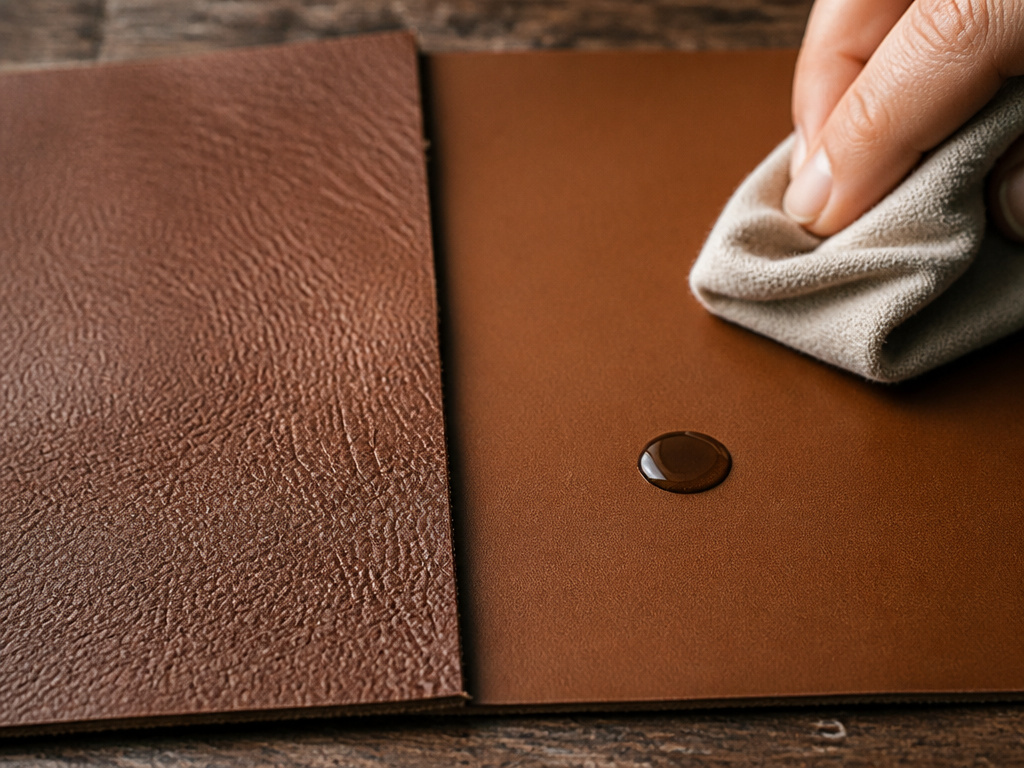
Aniline leather’s vulnerability is total. With no surface shield, it absorbs everything. A water drop will darken the spot as it soaks in. A red wine splash is a race against time. Sunlight from a south-facing window can visibly fade a section within a single season. The oils from your skin, over years, can saturate high-contact areas like armrests, creating a permanent, polished dark spot. The care protocol is strict: only pH-neutral leather cleaners applied with a barely-damp cloth, followed by a light, non-comedogenic conditioner every six to twelve months. Never use saddle soap, silicone sprays, or anything labeled for “protected” or pigmented leather.
Where this goes sideways: Using a pigmented-leather cleaner on semi-aniline. The alkaline or solvent-based formulas in those products are designed to cut through thick coatings. On the thin semi-aniline layer, they degrade the pigment binder. The color begins to lift in armrests and seat fronts within two years, requiring a professional leather finishing touch-up.
Semi-aniline’s failure is more insidious. Owners see the slight protection and assume it’s tough. They use household cleaners, alcohol wipes, or the wrong leather care products. The thin pigment coat isn’t designed for that abuse. It breaks down. The first sign is often a polished sheen on the armrests, where skin oils have saturated the compromised coating. Then, the color itself starts to wear away, revealing the lighter aniline-dyed leather underneath. Restoration involves stripping the failed coating and reapplying a matched pigment system, a job for a specialist.
The standard advice is to always condition leather every six months. Here’s a straightforward guide based on practical experience. For a client’s bag stored in a humid coastal climate, that six-month schedule caused over-conditioning. The leather felt perpetually greasy and limp. We backed it off to a yearly schedule, and the bag recovered its structure and dry hand-feel. The leather will tell you what it needs. Your environment, dry heat, damp cold, sunny rooms, dictates the calendar more than any blanket rule.
So, for care: * Aniline: Clean only with pH-neutral products. Condition lightly once or twice a year. * Semi-aniline: Use the same pH-neutral cleaners as aniline. You can stretch conditioning to once every 9-12 months due to the coating’s moisture-retention effect. Avoid all supermarket leather wipes.
Making the Choice: Which Finish Is For You?
This isn’t about better or worse. It’s about matching a material to a lifestyle. Let me share what I’ve learned from years of looking at used furniture. Ask yourself two questions.
First, what’s the room’s reality? Is it a formal, sun-drenched living room where you’ll sip espresso and read? Or is it a family room where movie nights, pet claws, and the occasional juice-box incident are standard operating procedure? * Choose Aniline if: The piece is for low-traffic, adult-only spaces. You value natural beauty over uniformity and are willing to perform gentle, regular maintenance. You want a sofa that becomes a legacy piece, changing gracefully with decades of use. * Choose Semi-Aniline if: The piece will see daily use from kids, pets, or guests. You want the look of natural leather but need a fighting chance against spills and scratches. You prefer a cleaner, more uniform appearance as it ages.
Second, what’s your relationship with maintenance? Are you a curator, someone who enjoys the ritual of care? Or are you a pragmatist who wants beautiful things that don’t demand constant attention? * Aniline turns care into a relationship. You’re not cleaning a surface; you’re preserving a porous, living material. * Semi-Aniline is more forgiving. You can wipe a spill in thirty seconds without a panic attack, and the cleaning routine is less frequent.
Common mistake: Buying an aniline leather sofa for a sunny, high-traffic family room because you fell in love with the sample’s feel. The fade lines and stain anxiety will start within the first year.
For most households, semi-aniline leather is the default. It gives you most of the sensual pleasure of real leather with a practical layer of defense. It’s the upholstery leather used in most premium, mass-market furniture because it balances beauty and survivability. The aniline leather sofa is a deliberate, luxurious choice for a specific, protected setting.
The Commercial Reality & How to Spot Fakery

Walk into a furniture store and you’ll hear “semi-aniline” used as a siren for leather with a natural grain and a light protective finish. Understand leather better to make confident choices. Sometimes, the term is applied to heavily corrected, thickly pigmented leathers to make them sound more premium.
Here’s how to spot the real deal in a showroom: 1. The Magnifying Glass Test: If you can, use your phone’s camera on macro mode. Real semi-aniline will still show a porous grain pattern. A fake will look like a featureless, plastic-coated sheet. 2. The Finger Drag Test: Drag a dry fingertip lightly across the surface. True aniline and semi-aniline will offer slight resistance, a “grab.” A heavily pigmented or corrected leather will feel slick and cold. 3. The Label Decoder: Ask for the spec sheet. Real semi-aniline will be described as “aniline-dyed with a light pigment coating” or “semi-aniline finish.” Vague terms like “rich leather finish” or “protected leather” often mean a fully pigmented, corrected hide.
Manufacturers do this because the definition of semi-aniline leather sits in a marketing sweet spot. It sounds artisanal but tough. A savvy buyer needs to verify the claim with their own eyes and hands.
Frequently Asked Questions
Is semi-aniline leather real leather?
Yes, it is. It starts with the same high-quality, aniline-dyed full-grain or top-grain hide as pure aniline leather. The difference is the addition of a microscopic protective coating on the surface. It is not a synthetic.
Which is more expensive, aniline or semi-aniline?
Typically, pure aniline leather is more expensive. This is due to the extremely high quality of the raw hides required (only the cleanest, most perfect hides can be used) and the more labor-intensive, chemical-focused dyeing process without the covering power of a pigment layer.
Can semi-aniline leather get wet?
It can handle a splash, but it is not waterproof. The thin coating will resist immediate absorption, giving you time to blot a spill. However, if liquid is left sitting, it will eventually penetrate and can cause a water spot or stain. Never soak semi-aniline leather.
Does semi-aniline leather peel?
It shouldn’t peel if properly cared for. Peeling is a failure mode of thick, plastic-like polyurethane coatings on low-quality pigmented leather. Semi-aniline’s coating is designed to wear gradually. However, if cleaned with harsh chemicals, the thin coating can break down and lift away in flakes, which is often mistaken for peeling.
How can I tell if my sofa is aniline or semi-aniline?
Do the water test. Place a single, small drop of water on an inconspicuous area. On aniline leather, it will darken the spot immediately as it’s absorbed. On semi-aniline, the bead will sit on the surface for a short time before slowly darkening the leather beneath it.
The Bottom Line
Aniline leather is for the purist and the patient curator, a commitment to natural beauty that deepens with age. Semi-aniline is for the realist who loves leather but lives life, a practical balance that forgives the occasional spill. The choice isn’t about quality; it’s about chemistry meeting context.
Before you buy, let your hand decide. Feel the surface. Ask about the finish. And remember the 30-micron rule: that’s the invisible line between a patina that tells your story and a finish that just gets older. When in doubt, opt for the semi-aniline finish. It covers more of life’s little accidents while still feeling like the real thing. That’s the trade-off, clear and simple.
