
Pros and Cons of Top Grain Leather: Benefits & Compromises
This post contains affiliate links. As an Amazon Associate, we earn from qualifying purchases.
Top grain leather is real leather that has been lightly sanded (typically 0.05–0.1 mm) and refinished to create a uniform, stain-resistant surface. The trade-off is a loss of natural character and long-term patina development, with the applied finish being the point of eventual failure, often showing cracks at flex points within 1–3 years on items like wallets.
That “0.05–0.1 mm” figure is the whole story in one measurement. It’s not much material. But sanding away even that whisper-thin layer of dense surface fiber changes everything about how the leather ages, feels, and ultimately fails. The process creates a blank canvas for a protective finish, which is both the leather’s greatest asset and its built-in expiration date.
What follows is a breakdown of that compromise. We’ll move past the marketing terms and look at the physical structure, the real-world performance curves, and the specific situations where top grain leather is a smart choice, or a regrettable one.
Key Takeaways
- Top grain leather’s applied finish provides excellent stain resistance and easy cleaning, but it can crack or peel, especially at high-flex areas like wallet folds or sofa armrests.
- The sanding process removes the hide’s most breathable layer and interrupts natural patina development; top grain leather ages by wearing down, not by building up character.
- For high-contact items you handle daily (wallets, belts), failure at stress points can appear in 1–3 years; for furniture with consistent care, a 10–15 year lifespan is typical.
- Ignore the grade label and ask about the hide’s origin; a top-grain leather from the prime “croupon” (back) section is stronger than a full-grain leather from the stretchy “belly.”
- Proper care means maintaining the finish, not the leather beneath; use light, specific cleaners and conditioners made for coated leathers to avoid a sticky, waxy residue.
The Core Trade-Off: Uniformity vs. Character
Let’s be clear about one thing. Top grain leather exists to solve a manufacturing problem: how to make a natural, variable material look consistent and flawless at scale. It starts with the same premium outer layer of the hide as full grain leather. Then, a machine sands away about the thickness of a sheet of paper, 0.05 to 0.1 millimetres, to buff out minor scars, insect bites, and grain variation.
This light correction removes the most porous, breathable part of the grain layer. The leather is then sealed with a pigmented coating or polymer finish that determines its final color and feel. You are not touching the leather’s natural surface; you are touching its manufactured skin.
The benefit is a smooth, predictable, and highly protective surface. Spills bead up. Stains wipe away. The piece looks uniform from one end to the other, which is why it dominates mid-market furniture, automotive interiors, and mainstream leather goods. The cost is twofold. First, you lose the unique narrative of the hide, the natural marks that tell its story. Second, you introduce a new component, the finish, which has its own aging process separate from the leather underneath.
In short: you trade natural longevity and evolving beauty for immediate practicality and a lower price point. It’s a sensible trade for many, but only if you go in with your eyes open.
The Tangible Pros: Why Top Grain Leather Sells
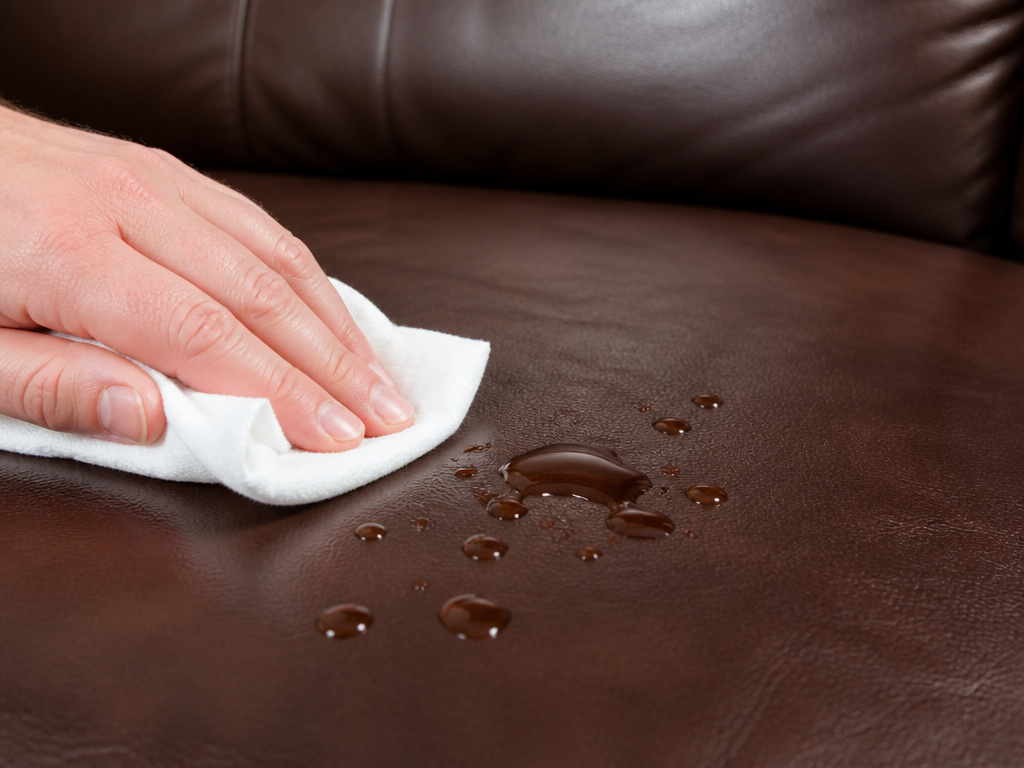 The advantages of top grain leather are immediate and practical. They’re the reasons it fills showrooms and online catalogs.
Stain and Spill Resistance is its superpower. The sealed surface acts like a raincoat. Water, coffee, even oil-based spills tend to sit on top, giving you precious time to wipe them away without a permanent mark. This makes it a legitimate choice for family rooms, dining chairs, or anything that might see daily accidents. For households with kids or pets, this one feature often justifies the entire choice.
Durability Against Abrasion is generally good. The coating protects the underlying fibers from surface scuffs and scratches that would immediately mark an unfinished full grain leather. It won’t develop a rich patina from those minor wounds, but it also won’t show every single one.
Aesthetic Consistency is a major selling point. If you want a sofa or a bag that looks exactly like the catalog photo, with no variation in color or texture, top grain delivers. The sanding and finishing process creates that blank-canvas uniformity that mass production requires. This is why understanding leather grain is so important, here, the natural grain is literally being replaced.
Cost sits between full grain and lower grades. You get a real leather hide, not a composite, for less than the price of full grain. It’s the “value” pick in the real leather category, offering a significant step up in feel and longevity from genuine or bonded leathers.
| Pro | What It Means | Best For |
|---|---|---|
| Stain Resistance | Sealed finish repels liquids; easy to clean. | Family furniture, car interiors, daily-use bags. |
| Uniform Appearance | Consistent color and texture across the entire piece. | Matching decor, mass-produced goods where look is standardized. |
| Abrasion Resistance | Coating protects against surface scuffs and light scratches. | High-traffic areas, items that get knocked around in daily carry. |
| Cost Efficiency | Real leather at a lower price point than full grain. | Buyers wanting genuine hide quality without the premium investment. |
The Hidden Cons and Failure Points
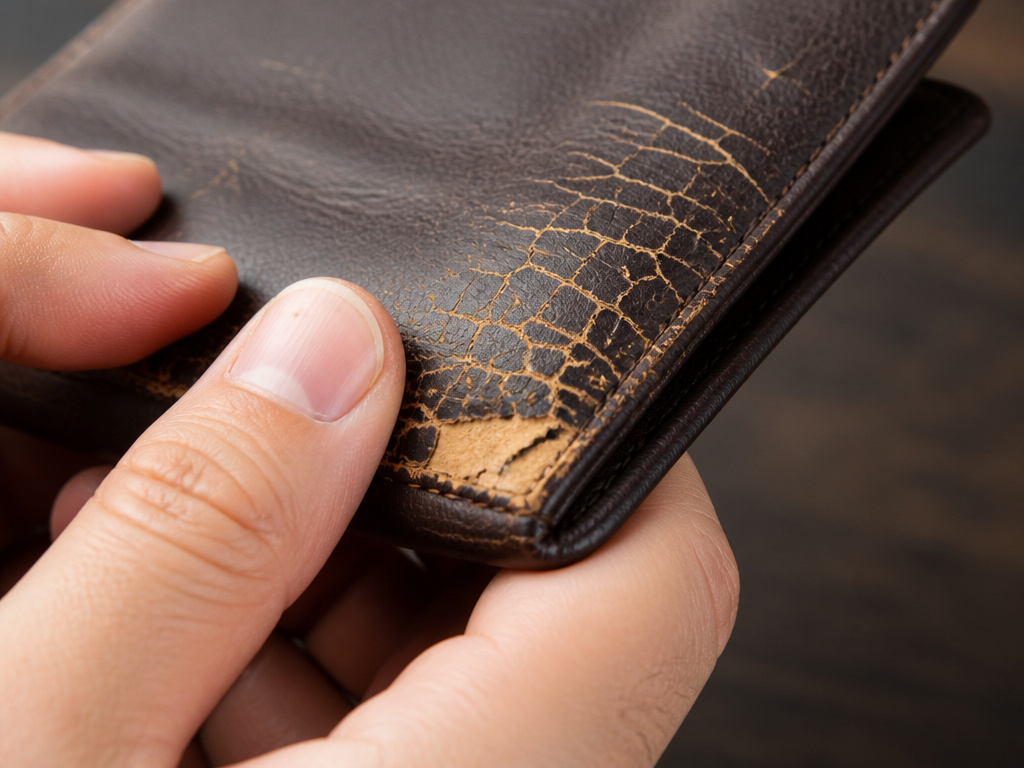 The downsides are slower to reveal themselves. They’re about aging, not initial quality. A top grain leather sofa can feel perfect for five years before the first sign of trouble appears.
The Finish is the Failure Point. That protective coating doesn’t breathe. It doesn’t flex eternally. Over time, especially at sharp bend points, it can crack or peel. This isn’t the leather failing, the hide beneath might be perfectly sound. It’s the laminate on top delaminating. On a wallet, this often shows at the fold lines or card-slot edges within a couple of years. On a sofa, look at the front edge of the seat cushions and the top of the armrests.
Where this goes sideways: Placing a top grain leather sofa in direct sunlight or near a heat vent. The coating “bakes,” becoming brittle and losing its flexibility. Micro-cracks can propagate in under two years, long before the leather itself would have aged.
Patina Development is Minimal to Nonexistent. Full grain leather patina is a deepening of color and a gaining of luster from oils and use. Top grain leather doesn’t patina; it wears. The coating slowly dulls, scuffs, and may eventually reveal a lighter color underneath if scratched deeply. It doesn’t tell a better story with age; it just looks progressively older.
Breathability is Reduced. That sealed surface traps heat and moisture. In a car interior on a hot day, top grain leather can feel stickier and hotter against your skin than a porous full grain or semi-aniline leather would. This is a direct result of sacrificing the natural grain layer for uniformity.
Repair is Difficult and Often Obvious. Fixing a scratch or a crack in the finish is like touch-up painting on a car. You can mask it, but you’ll rarely blend it invisibly. The repair sits on top, whereas a scuff on full grain leather can often be rubbed into the surface with a bit of conditioner.
Where Top Grain Leather Fails First (And How to Spot It)
Failure follows stress. The finish is a rigid film on a flexible substrate, and physics dictates where the tension wins.
- Folds and Creases (Wallets, Belts, Bag Flaps): This is the fastest failure zone. The constant bending fatigues the coating. Look for a network of tiny, white micro-cracks along the fold line. They feel gritty to the touch. This often appears in one to three years with daily use.
- Compression Points (Sofa Seams, Armrests): Where the leather is consistently pressed and rubbed, the coating wears thin, becoming shiny and smooth, a “bald spot.” Eventually, the pigment wears away to reveal a different color beneath.
- Dry, Cold Environments: Low humidity sucks moisture from both the leather and the coating. The coating becomes less pliable, and the leather underneath contracts slightly. This mismatch in movement promotes cracking. A top grain leather jacket in a cold, dry climate will show wear far faster than one in a temperate one.
- Chemical Exposure: Harsh household cleaners, alcohol, or acetone can break down the finish’s chemistry, causing it to cloud, blister, or become tacky. The damage is immediate and irreversible.
The feel test never lies. Run your finger across a stressed area. Full grain leather will feel like slightly textured, living skin. A failing top grain finish will feel like a brittle, plastic film that’s lost its bond. That’s your warning sign.
The Bigger Picture: Grade Labels vs. Hide Quality
This is the part most guides miss, and it reframes the entire pros and cons of genuine leather debate. The commercial terms “full grain,” “top grain,” and “genuine” describe processing, not inherent quality.
A more useful indicator is the location of the cut on the hide. * Croupon: The prime back section. Dense, tight fibers, minimal stretch. This is where the best leather comes from, regardless of grade. * Belly & Flanks: Softer, stretchier, with a looser fiber structure. More prone to deformation and wear.
Here’s the practical takeaway: A top-grain leather from the croupon is stronger and will last longer than a full-grain leather from the belly. The industry’s leather grading system can obscure this. When evaluating quality, ask a knowledgeable seller about the hide’s origin, not just its grade label. This principle also explains why some split leather from the croupon can be an excellent, durable material for certain applications.
Top Grain vs. The Alternatives: A Clear Comparison
How does it stack up against the other options on the shelf? Let’s compare real-world performance.
| Leather Type | Surface | Aging Behavior | Typical Lifespan (Furniture) | Best Use Case |
|---|---|---|---|---|
| Full Grain | Natural, untouched. Shows pores, scars. | Develops a rich, deep patina. Improves with age. | 15–25+ years | Heirloom items, luxury goods, where character is desired. |
| Top Grain | Sanded & finished. Smooth, uniform. | Finish wears down; may crack or peel. Minimal patina. | 10–15 years | Family furniture, automotive interiors, practical daily goods. |
| Genuine Leather | Lower split, heavily finished. Can feel thin. | Coating cracks; leather beneath dries and fails. | 5–10 years | Budget-conscious items where real leather is a requirement. |
| Bonded Leather | Shredded fibers glued to backing, embossed. | Peels and flakes in sheets. | 1–5 years | Disposable furniture, very low-cost accessories. |
The gap between top grain and bonded leather pros and cons is a chasm. Bonded material isn’t solid hide; it’s a composite that fails catastrophically. Top grain is the first grade where you’re getting a solid, continuous piece of quality hide. The jump from top grain to full grain is more nuanced, it’s about aging philosophy, not basic durability. For a deeper dive on that specific choice, our full-grain vs top-grain comparison breaks down the decision in detail.
Caring for the Finish, Not Just the Leather
You don’t condition top grain leather to nourish it, the finish blocks conditioner from penetrating. You maintain it to preserve the coating.
Do:
- Dust weekly with a dry, soft cloth.
- Clean spills immediately with a damp cloth.
- Use a cleaner specifically formulated for pigmented or coated leathers every 6-12 months.
- In very dry climates, use a light, non-oily leather lotion designed for finished leather to maintain flexibility.
Common mistake: Using a heavy oil or wax-based conditioner. It sits on the surface, attracting dirt and creating a sticky film that eventually turns into a white, waxy residue. It cannot soak in.
Don’t:
- Use saddle soap, mink oil, neatsfoot oil, or any “natural” conditioner meant for unfinished leather.
- Place in direct sunlight or within three feet of a heat source.
- Use abrasive cleaners, magic erasers, or anything containing alcohol or ammonia.
Think of it like maintaining a painted wooden cabinet. You’re protecting the paint, not trying to oil the wood beneath it. The same logic applies when dealing with more heavily processed variants like corrected grain leather.
Frequently Asked Questions
Does top grain leather last long?
Yes, but with a caveat. As a solid piece of hide, it has good inherent durability. However, its lifespan is capped by the integrity of its applied finish. With proper care and in a stable environment, top grain leather furniture can last 10–15 years. Small, high-flex items like wallets may show finish wear in 1–3 years.
Is top grain leather good for a sofa?
It’s a very popular and often sensible choice. Its stain resistance, uniformity, and lower cost than full grain make it practical for families. Understand that it won’t develop a patina like a full grain sofa, and the areas you touch most will show a different kind of wear (shiny spots, potential cracking) over a decade or so.
Can top grain leather get wet?
The finish makes it highly water-resistant for short exposures. Spills will bead up. However, it is not waterproof. Prolonged soaking can allow water to seep through seams or stitch holes, potentially damaging the leather underneath and causing the finish to cloud or bubble. Dry it immediately if it gets wet.
How can you tell if leather is top grain?
The color will be perfectly even. Press it; it should feel consistently firm with a slight give, and the crease will be a sharp line (the finish folding) rather than a soft, natural wrinkle. Compare it to the full-grain leather pros and cons to see the visual difference.
The Bottom Line
Top grain leather is the pragmatic center of the real leather world. It delivers genuine hide, practical stain resistance, and aesthetic consistency at a palatable price. Its primary weakness is not a lack of strength, but a lack of soul, its aging process is one of decline, not enhancement.
Your decision hinges on a single question: do you want leather that looks flawless now and wears out predictably, or leather that looks unique now and grows more personal with time? For a family sofa, a car interior, or a bag that needs to survive the daily grind, top grain is a defensible, intelligent choice. Just know that the smooth surface you’re paying for is also the part that will eventually tell you it’s done.
