
Discover What Goatskin Leather Is & Why It’s a Workhorse
This post contains affiliate links. As an Amazon Associate, we earn from qualifying purchases.
Goatskin leather is a durable, fine-grained leather made from the skin of goats, prized for its high strength-to-weight ratio. It’s thinner and lighter than cowhide but pound-for-pound stronger, making it ideal for gloves, bookbinding, and lightweight durable goods. The term ‘kidskin’ refers specifically to the softest leather from young goats.
That strength-to-weight ratio is the whole game. It’s what makes goatskin the quiet workhorse of the leather world, deployed where cowhide would be too heavy and lambskin too delicate, but the job still demands toughness. Understanding this core property lets you see past the marketing terms and evaluate the material for what it actually does.
This guide breaks down goatskin leather into the specs that matter: its tensile strength, how it’s tanned, the grain patterns you’ll see, and where it genuinely outperforms, or falls short against, other leathers like lambskin, deerskin, and cowhide. You’ll finish knowing exactly what you’re buying when the label says ‘goatskin’.
Key Takeaways
- Goatskin’s claim to fame is its strength-to-weight ratio, it’s stronger pound-for-pound than cowhide while being significantly thinner and lighter.
- ‘Kidskin’ isn’t a different animal; it’s the softest grade of goatskin, taken from young goats, traditionally used for luxury gloves.
- The grain is distinct, a smaller, more pronounced pebbling compared to cowhide’s smoother pattern, which adds to its abrasion resistance.
- Its natural thinness makes it perfect for applications where bulk is the enemy: glove linings, lightweight jackets, fine bookbinding.
- A label reading ‘Genuine Leather Goatskin’ is legally truthful but tells you nothing about the tanning quality or the leather’s actual grade, always look for more information.
Understanding the Goatskin Spec Sheet
You don’t judge leather by adjectives. You judge it by numbers a tannery would stamp on a spec sheet. For goatskin, three numbers tell you almost everything: tensile strength, shrinkage temperature, and chromic oxide content.
Tensile strength is how much pulling force the leather can take before it tears. For vegetable-tanned goat leather, the Indonesian National Standard (SNI) sets a minimum of 1600 N/cm². That’s a baseline. Research shows fresh, well-processed goatskin can start much higher, over 3200 N/cm², but this drops with improper storage. The leather loses about a third of its strength after just three months in suboptimal conditions.
Shrinkage temperature tells you how well-tanned the hide is. It’s the temperature at which the leather’s collagen fibers tighten and the material starts to shrivel. A high number means a stable, well-tanned product. For chrome-tanned goatskins (called “wet blue”), the ISO 5431:2022 standard mandates a minimum shrinkage temperature of 95°C. That’s a serious threshold, it normally requires a minimum chromic oxide content of 3.0% in the leather’s dry mass. For vegetable-tanned goat leather, the SNI minimum is lower, at 70°C.
The ISO 5431:2022 standard is specific: for chrome-tanned wet blue goatskins, the shrinkage temperature must not be less than 95 °C. Achieving this consistently requires a chromic oxide content of at least 3.0% and careful control of the tanning process.
These aren’t abstract grades. They’re physical ceilings. A glove made from leather that just meets the SNI minimum (1600 N/cm², 70°C) will feel stiff initially and wear out faster than one made from leather that meets the ISO chrome-tan spec. The difference isn’t academic; it’s a measurable gap in longevity.
What Is Goatskin Leather Used For?
Goatskin’s unique property profile lands it in some classic, time-tested roles. Its thinness and pliability are assets, not drawbacks, in these applications.
First, gloves. This is the most famous use, specifically kidskin for dress gloves. The leather is soft enough to be comfortable, strong enough to resist abrasion at the fingertips, and thin enough not to sacrifice dexterity. It breathes well, too.
Second, bookbinding. For centuries, high-quality goatskin has been the material of choice for covering important volumes. The St Cuthbert Gospel in the British Library, the oldest European book binding, is red goatskin. It holds up to the friction of handling and develops a rich patina, unlike thicker, more rigid leathers.
Third, garments and linings. Goatskin makes excellent lightweight jackets, especially in traditional military styles where durability and mobility were both required. Its thinness also makes it a superior lining material for bags and coats, adding structure without bulk, a quality shared with high-quality deerskin leather.
| Application | Why Goatskin Works | A Common Alternative |
|---|---|---|
| Dress Gloves | Thin, soft, strong, breathable | Lambskin (softer, less durable) |
| Luxury Bookbinding | Durable, develops patina, historically significant | Calfskin (smoother, less textured) |
| Lightweight Jackets | Strong for its weight, traditional grain character | Cowhide leather (heavier, less pliable) |
| Bag Linings | Adds strength without noticeable thickness | Synthetic fabrics (less durable, no patina) |
It’s also used for accessories like wallets and watch straps, where its strength allows for thinner constructions that still hold up over time. And, in its untanned form, goatskin has been used for centuries as parchment for writing and as drum heads for instruments like the Irish bodhrán, where its tight, responsive acoustic properties are valued.
Goatskin vs. Lambskin: The Strength vs. Softness Trade-Off
This is the most common comparison, and it’s where people get tripped up by feel alone. At a glance, both are soft, fine-grained leathers. The difference is under your thumb.
Lambskin is softer. There’s no debate. The fibers are finer, the hide is thinner from the animal, and it has a buttery, almost liquid drape. It’s the luxury choice for super-soft jackets, pillow-soft handbags, and upholstery where the primary concern is tactile pleasure.
Goatskin is stronger. Pound for pound, its internal fiber structure is denser and more interlocked. That pebbled grain isn’t just for looks; it’s a topography of raised fiber bundles that resist scuffing. A goatskin glove will outlast a lambskin glove in identical conditions, every time. This makes lambskin leather better for low-impact luxury, while goatskin is the choice for durable softness.
The choice often comes down to the item’s duty cycle. A lambskin clutch you use for evenings out is a perfect match. A goatskin work glove, or a travel bag lining that sees daily abrasion from keys and pens, is a different story. One will show wear as a gentle softening; the other will show wear as a stubborn refusal to fail.
Where this goes sideways: Choosing lambskin for an item that sees daily abrasion. The surface will pill and wear thin within a season, while goatskin would just be getting broken in.
The Tanning Process: Vegetable vs. Chrome
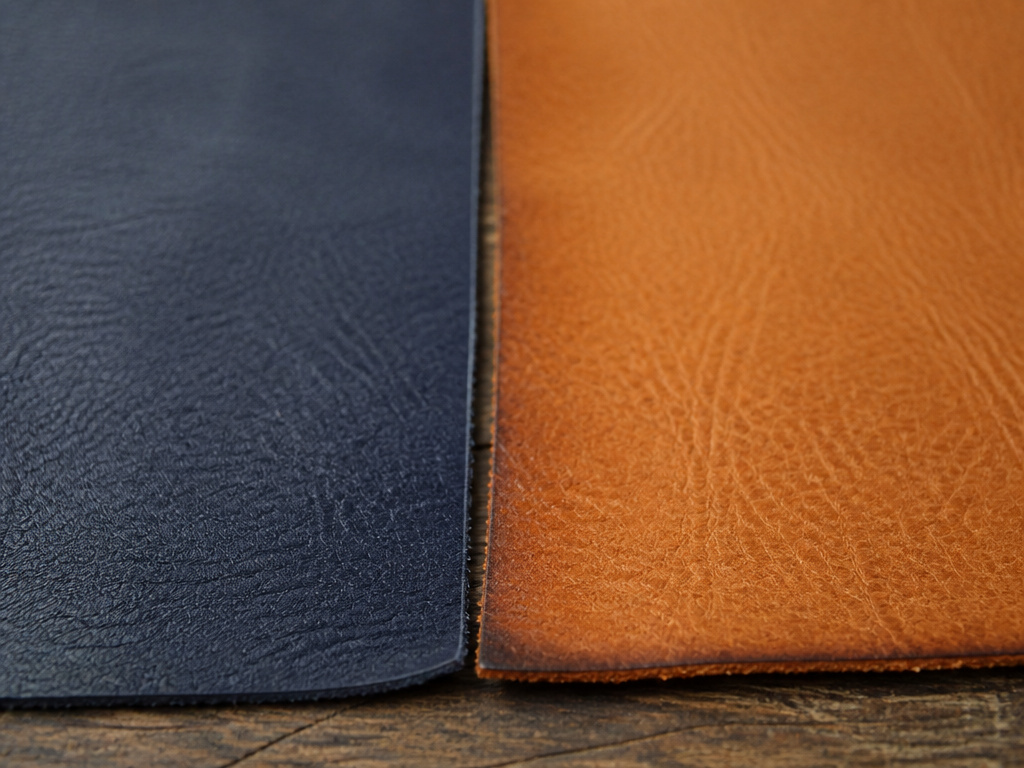 Like all leather, goatskin is defined by how it’s tanned. The process locks in the raw skin’s properties and determines its final character, care needs, and aging path.
Chrome Tanning is the modern, industrial method. It uses chromium salts to stabilize the hide quickly, often in a day. Chrome-tanned goatskin is what you’ll find in most mass-market gloves and accessories. It’s highly water-resistant, very stable in shape, and often comes out with a more uniform, dyed-through color. The ISO 5431:2022 standard we mentioned earlier applies specifically to these chrome-tanned “wet blue” goatskins. The high shrinkage temperature (95°C+) means it won’t distort easily with heat.
Vegetable Tanning is the traditional, slower method using tannins from tree bark, leaves, and fruits. It can take weeks. Vegetable-tanned goatskin is less common but highly prized. It develops a richer, more complex patina over time, ages to a deeper tone, and is generally more breathable. It’s also more susceptible to water spots and will stiffen if it dries out, requiring more attentive care. The physical quality, as noted in research, peaks right after tanning and can degrade with long storage if not properly maintained.
Why does this matter for you? If you want a low-maintenance, weather-resistant jacket that holds its shape, chrome-tanned is the pragmatic choice. If you’re crafting a heirloom-quality journal cover or a belt that you want to darken and glow with age, seek out vegetable-tanned goatskin. The Wikipedia entry on goatskin material provides a broad overview of its traditional uses, which often align with vegetable-tanned methods.
Grain, Grades, and the “Genuine Leather” Trap
 Let’s be clear about one thing: “Genuine Leather” is a description of material origin, not a quality grade. By legal definition, anything that contains a layer of real animal skin can be called genuine leather. This includes the beautiful full-grain goatskin on a $300 glove and the sanded-down, heavily painted split goatskin on a $20 wallet.
Full-Grain Goatskin means the original, outermost grain layer is intact. You’ll see the natural pebbling, scars, and wrinkles. This is the strongest and most durable form, as the tight grain layer acts like a wear surface. It will develop the best patina.
Top-Grain Goatskin has been lightly sanded or buffed to remove surface imperfections. It’s more uniform in appearance but slightly less durable than full-grain. It’s a common choice for gloves where a perfectly uniform look is desired.
Suede is created by splitting the hide and brushing up the inner fibrous layer. Goatskin makes a very fine, durable suede. While the grain is important for “glazed kid” and other top-tier products, skins with coarser grains or minor defects are perfectly suited for suedes and velours, as noted in industry research.
The trap is buying based on the phrase “Genuine Goatskin Leather” alone. It tells you the species, not the craftsmanship. Always ask, or look for clues: is it described as full-grain? Is the tannery named (e.g., Horween, Wickett & Craig)? A named source is worth ten marketing terms. This focus on the maker over the label is crucial when you’re trying to test leather quality before you buy.
How Goatskin Compares to Other Leathers
Seeing goatskin in context helps place its value. Here’s a quick reference on how it stacks up against other common leathers.
| Leather Type | Key Strength | Key Limitation | Best For (Compared to Goatskin) |
|---|---|---|---|
| Goatskin | Strength-to-weight ratio, abrasion resistance | Thinner hides limit use for heavy belts, etc. | Gloves, lightweight durability, linings |
| Sheepskin Leather | Insulation, softness, loft | Less durable, tears more easily | Slippers, shearling coats, soft linings |
| Pigskin Leather | Breathability, unique pore pattern | Can be stiff, less uniform grain | Sports equipment, breathable work gloves |
| Buffalo Leather | Thickness, rugged durability | Very heavy, stiff when new | Heavy-duty bags, belts, upholstery |
| Horsehide Leather | Extreme density, long-term wear-in | Expensive, can be stubborn to break in | High-wear motorcycle gear, legacy workwear |
This table shows goatskin’s niche. It doesn’t try to be the thickest or the softest. It aims to be the most reliable performer in the thin-and-strong category. It’s more durable than sheepskin, more refined than pigskin, and far more pliable than buffalo or horsehide. For its intended jobs, it’s often the best tool available.
Caring for Goatskin Leather
Goatskin isn’t fussy, but it has specific needs driven by its tanning method.
For chrome-tanned goatskin (most gloves, modern jackets), care is simple. Wipe with a damp cloth to remove dirt. Use a light, non-oily leather conditioner (like a spray or milk) once a year, or only if the leather feels dry. Over-conditioning is the biggest mistake, it clogs the pores and can leave a greasy residue.
For vegetable-tanned goatskin, care is more involved. Keep it dry. If it gets wet, let it dry slowly at room temperature, away from heat. Condition it with a light application of a natural oil-based conditioner (like saphir greasy leather cream) every 6-12 months, depending on use. The goal is to replenish the tannins that evaporate over time. This regular care is what allows a beautiful leather patina to develop.
A note on storage: don’t store goatskin goods in plastic bags. They need to breathe. Use a cloth dust bag. And remember the lesson from the research, leather stored in poor conditions loses strength fast. Keep your goatskin items in a cool, dry, dark place.
Frequently Asked Questions
Is goatskin leather good quality?
Yes, when it comes from a reputable tannery and is used for its intended purpose. Its quality is defined by its excellent strength-to-weight ratio and durability for thin leathers. A well-made goatskin glove or jacket can last decades.
Is goatskin leather durable?
It is highly durable for its weight class. It is more abrasion-resistant and tear-resistant than lambskin or sheepskin of similar thickness. It may not be as thick as heavyweight cowhide, but for applications where thinness is required, it’s one of the most durable choices available.
What is the difference between goatskin and lambskin leather?
The main difference is strength versus ultimate softness. Goatskin has a tighter, denser fiber structure and a more pronounced pebble grain, making it stronger. Lambskin has finer, looser fibers, making it incredibly soft and supple but less hard-wearing. Think of goatskin as a tough, lightweight canvas and lambskin as a delicate, woven silk.
Can goatskin leather get wet?
Chrome-tanned goatskin handles moisture well and will resist water spotting. Vegetable-tanned goatskin is more vulnerable; water can leave dark spots or stains, and it can stiffen if not dried properly. For either type, it’s best to avoid soaking and to dry naturally away from direct heat.
How can you tell real goatskin leather?
Look for the distinctive small, pebbled grain pattern, it’s more pronounced and irregular than cowhide. Feel it; real goatskin should be supple but have a firm backbone, not flimsy. Check the edges; real leather will have a fibrous, unfinished edge, not a perfect painted plastic-like edge. When in doubt, consulting a resource like the CAMEO museum materials database for reference images can help train your eye.
The Bottom Line
Goatskin leather is the underdog that consistently wins on performance. Forget the vague marketing terms. Focus on what it delivers: serious strength in a thin, pliable package.
If your project needs a leather that’s soft enough for gloves but tough enough for a bag lining, start looking at goatskin. If you see a beautiful, pebbled leather jacket that feels surprisingly substantial for its weight, you’ve likely found it. And if you’re comparing it to lambskin, remember the trade-off: goatskin gives up a fraction of the butter-soft feel to gain a huge advantage in daily durability.
The final check is always the source. A goatskin leather specified by a known tannery, whether it’s discussing the differences in leather grain or backed by a detailed government report on leather properties, is a safer bet than an anonymous “genuine leather” label. Choose the maker, and the material will follow.
