
What Is a Monk Strap Shoe? Defining the Iconic Buckle Design
This post contains affiliate links. As an Amazon Associate, we earn from qualifying purchases.
A monk strap shoe is a laceless dress shoe secured by one or more leather straps and metal buckles. It sits between a formal Oxford and a casual Derby in formality, first registered as a design in 1901. The core details, strap angle, buckle quality, and construction method, determine whether a pair looks timeless or tacky.
That 1901 date isn’t just trivia. It tells you this isn’t a fleeting trend, but a design that’s been refined for over a century. The real conversation isn’t about whether to wear them, but about how to spot the details that make a monk strap elegant rather than awkward.
What follows is a breakdown of the anatomy, a clear guide to the single vs. Double debate, and the specific construction and styling choices that separate a wardrobe staple from a mistake you’ll regret in two years.
Key Takeaways
- The first registered monk strap design appeared in 1901, debunking the common Alpine monk origin story as likely legend.
- Strap spacing and angle matter more than you think: narrow, parallel buckles often signal a cheaper, less sophisticated last.
- Even after nearly 12 years of wear, some high-end monk straps (like certain John Lobb models) can remain noticeably stiff, a trade-off for their structure.
- Buckle metal should ideally match your other hardware (belt, watch), but it’s not a strict rule if the overall look is cohesive.
- For longevity, prioritize the construction method (Goodyear welt or Blake stitch) over exotic leathers or brand name alone.
The Core Anatomy of a Monk Strap Shoe
Forget laces. The entire identity of a monk strap shoe hinges on its strap-and-buckle closure system. This isn’t just a decorative swap; it changes how the shoe fits, feels, and functions. The strap, typically a broad band of leather, crosses over the instep and fastens with a metal buckle on the outside of the foot. It’s a simpler, cleaner line than a laced vamp, which is why it reads as slightly more formal than an open-laced Derby but less severe than a closed-laced Oxford.
The buckle isn’t an afterthought. Its weight, finish, and shape are part of the shoe’s balance. A flimsy, lightweight buckle feels cheap and can dig into the strap. The metal should ideally coordinate with other hardware you’re wearing, a brass buckle with a brass belt buckle, for instance. Let’s be clear about this: while perfect matching is ideal, it’s not a law. If your belt has a silver buckle and your monks have brass, but the overall outfit works, that’s fine. The Wikipedia monk shoe entry notes the design’s innovation by English shoemaker Edward Green, cementing its place in the pantheon of classic leather shoe styles.
A monk strap is defined by its laceless closure: one or more leather straps secured by metal buckles over the instep. This design creates a sleek, uninterrupted vamp line, placing it in the dress shoe category. Variations include cap toes, plain toes, and broguing, with single and double strap configurations being the most traditional and enduring.
The tongue on a monk strap is also distinct. It’s usually wider than on a lace-up shoe. This isn’t a style choice. That extra width is necessary to distribute the pressure from the single strap point across a broader area of your foot, preventing discomfort. A narrow tongue would cut in.
Single Monk vs. Double Monk: More Than Just Buckles
The single monk strap, with one buckle, is the original. It’s sleek, minimalist, and generally considered a touch more formal. The double monk arrived later, adding a second strap and buckle. The extra strap was theoretically for better fit adjustment, especially for narrower feet. In practice, the functional difference is minor. The real difference is visual weight and style attitude.
A double monk is a bolder statement. It’s more jewelry for your foot. This makes it inherently a bit more casual and playful than its single-strap sibling. The risk with double monks isn’t in choosing them, it’s in choosing a bad pair.
Here’s the thing. On a double monk, the spacing and angle of the two buckles are everything. Low-quality or fashion-forward lasts often place the buckles close together and parallel to each other. This looks static and inelegant. A more sophisticated design uses wider spacing and a slight offset angle between the buckles. This creates a dynamic, balanced look that’s far more pleasing to the eye.
| Feature | Single Monk Strap | Double Monk Strap |
|---|---|---|
| Formality | Slightly more formal; sleeker silhouette. | Slightly more casual; bolder statement. |
| Visual Weight | Minimalist, one focal point. | More complex, two points of interest. |
| Fit Adjustment | Limited to the holes on one strap. | Theorized better fit, but practically similar. |
| Common Pitfall | A strap placed too high or low on the vamp. | Narrow, parallel buckle spacing on a cheap last. |
Extreme designs, like triple straps or cutaway styles where the buckles face backwards, are just that: extreme. They’re short-term fashion, not lasting style. If you’re building a versatile wardrobe, stick with the classic single or double. They’re the ones you’ll still be wearing in a decade. This principle of timeless design over trend applies to all classic types of leather shoes, from brogue shoes to loafers.
Decoding Formality: Where Monk Straps Fit In
On the classic formality ladder, monk straps occupy a crucial middle rung. They are less formal than a full Oxford (or Balmoral) but more formal than an open-laced Derby (or Blucher). This in-between status is their superpower. It’s what makes them so versatile.
A black single-monk strap with a plain toe is your most formal option. It can confidently substitute for an Oxford in a business suit setting, adding a distinct touch without breaking protocol. As you move to brown leather, then to suede, and finally to a double monk, the formality drops incrementally. A brown suede double monk is practically a smart-casual champion, perfect with tailored trousers or dark jeans.
The material shift is a major formality lever. Calfskin is the standard, serious choice. Suede is its more relaxed, tactile cousin. It’s also less durable and a nightmare in the rain, water spots suede instantly. I’ve seen a pair of beautiful suede monks ruined by one unexpected downpour. They’re for confident dry days only. For a truly casual, soft alternative, you’d look at something like a traditional moccasin, which operates in a different league altogether.
Construction & Quality: What to Look For Beneath the Buckle
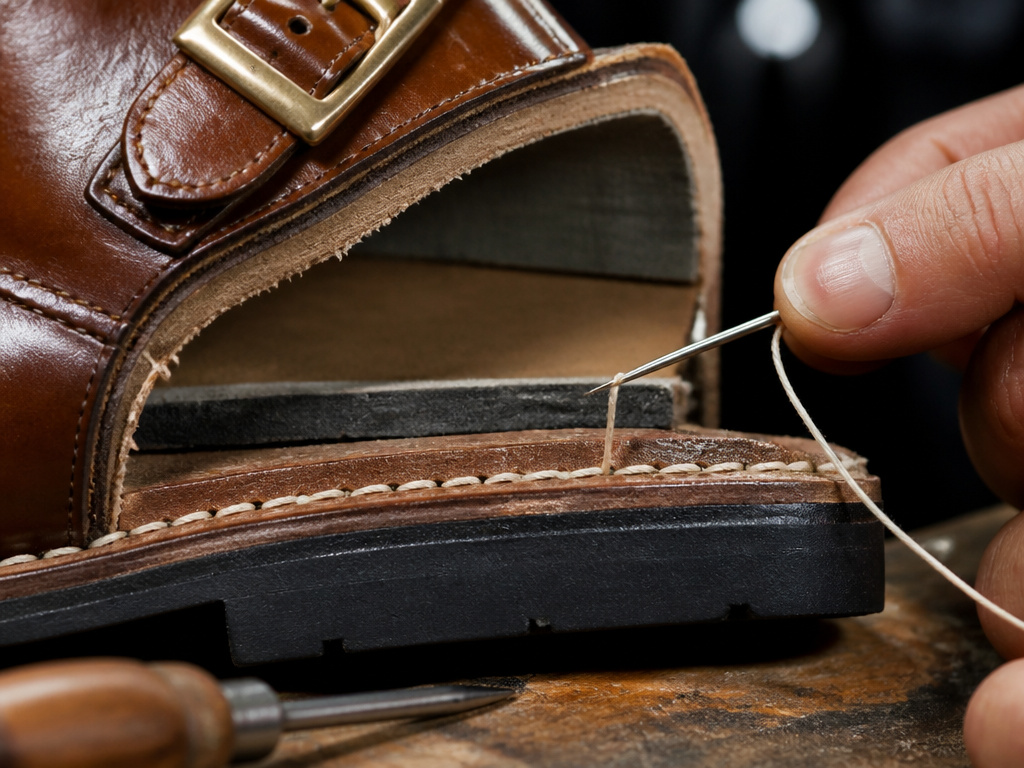
You can have the finest calfskin and perfect buckle alignment, but if the shoe is glued together, it’s a temporary pleasure. The construction method is the bedrock of longevity. For monk straps, you’ll typically encounter two main types: Blake stitch and Goodyear welt.
Blake construction, common in Italian shoemaking, stitches the sole directly to the upper through the inside of the shoe. It allows for a sleeker, closer-fitting silhouette because there’s no exterior welt. The trade-off is that Blake-stitched soles are harder to replace, often requiring a specialist. The Thomas Bird monk straps mentioned in our research use this method, favoring that elegant Italian profile.
Goodyear welting is the gold standard for durability and recraftability. A strip of leather (the welt) is stitched to the upper and the insole. The outsole is then stitched to the welt. This creates a cavity that can be filled with cork, which molds to your foot over time. The key advantage is that the outsole can be worn down and replaced multiple times without damaging the upper. It’s the definition of a long-term investment. Understanding the advantages of Goodyear welt construction is essential for any serious shoe buyer.
Where this goes sideways: Choosing a shoe for its patina or buckle style while ignoring the construction. A cemented (glued) sole will separate, often within a year or two of regular wear, and the shoe is effectively dead. A welted shoe can be given new life repeatedly.
The sole material is the next decision. A leather sole is traditional, dressy, and develops a personal wear pattern. It’s also slippery when new and less forgiving on wet pavement. Many makers, like Thomas Bird, now use a leather sole with a thin rubber insert at the heel and toe for better wear, a smart hybrid. A full rubber sole is the most durable and weather-resistant, but it immediately casualizes the shoe. Weigh your comparing sole types based on your climate and daily use.
How to Wear Monk Strap Shoes (And How Not To)
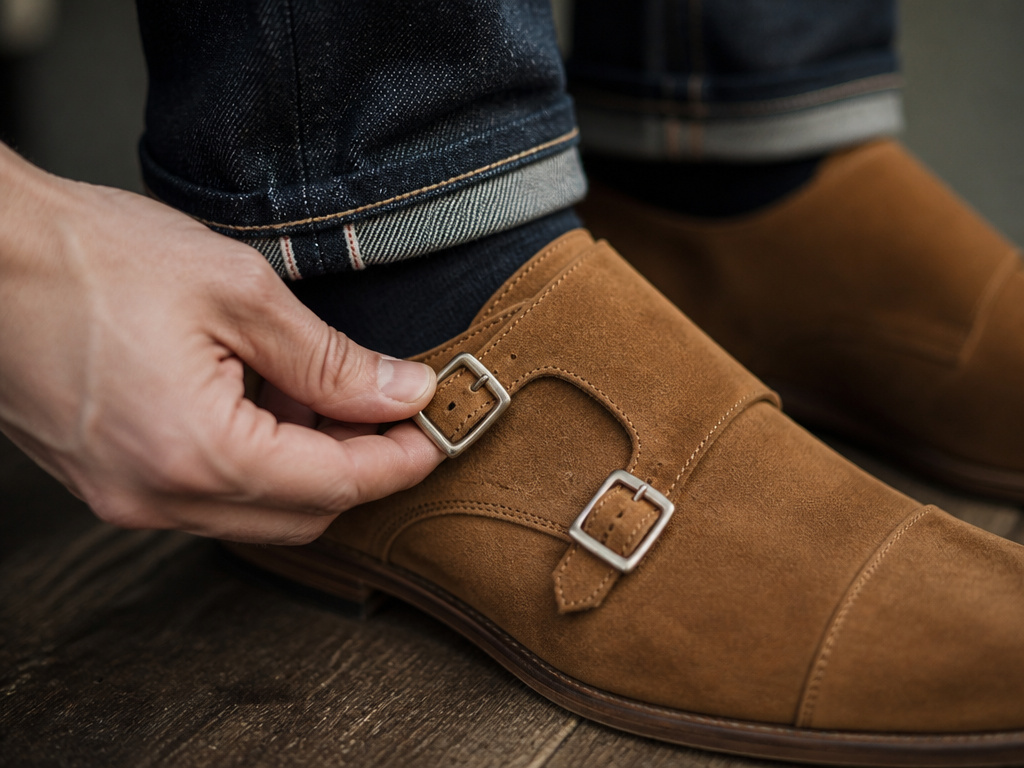
Monk straps have a reputation for being tricky, but the rules are straightforward once you understand their level of formality. Match the shoe’s formality to the outfit’s.
For business formal or a conservative office, your black or dark brown single monk is the tool. Pair it with a full suit in grey, navy, or charcoal. For business casual, you have more room. A brown double monk works perfectly with odd trousers, a blazer, and a dress shirt. This is where they truly shine, bridging smart and relaxed.
Smart casual and weekend wear is where suede monks or more casual leather finishes come alive. Try a tan suede double monk with dark selvedge jeans and a crisp oxford cloth button-down. The contrast in texture makes the outfit. The one universal rule? Never, under any circumstances, wear them with sweatpants or shorts. It just looks like you got dressed in the dark.
Caring for them is essential. Use shoe trees. Rotate them so they don’t wear out in the same spot every day. For polished calfskin, a routine of brushing, occasional conditioning, and polishing with a cream containing carnauba wax will maintain the finish. For a hand-applied patina like on some Thomas Bird models, they recommend a neutral cream first to preserve the unique coloring. A dedicated leather shoe care routine is what turns a purchase into a possession.
Frequently Asked Questions
Are monk strap shoes still in style?
Yes, but not as a fleeting trend. As a classic element of menswear, monk straps are perpetually in style. Their popularity may ebb and flow with fashion cycles, but a well-made, classically proportioned single or double monk will never look dated. They’ve survived since 1901 for a reason.
Can you wear monk straps with a suit?
Absolutely. A single monk strap in black or dark brown calfskin is an excellent alternative to oxfords with a suit. It’s formal enough for business and weddings while showing a bit of considered individuality. Just ensure the shoe is polished and in good condition.
What is the difference between monk straps and derby shoes?
The difference is in the closure and formality. Derby shoes have open lacing (the quarters are sewn on top of the vamp), which is less formal. Monk straps have no laces, using a buckle instead. A monk strap is generally considered more formal than a derby but less formal than an oxford.
How should monk strap shoes fit?
They should fit snugly but not tightly across the instep where the buckle closes. Your heel should be locked in place with minimal slip. There should be no pinching on the sides of your feet. Because the fit is less adjustable than laces, trying them on is crucial. If they’re stiff, proper breaking in techniques will help.
How do you maintain and polish monk strap shoes?
The process is similar to other leather shoes. Use a horsehair brush to remove dust. Apply a small amount of leather conditioner if the leather feels dry. Use a quality cream polish to nourish the leather and restore color, applying it with a cloth or dauber and buffing to a shine with a soft brush. Pay attention to the strap and buckle area to prevent cream buildup. For a deep shine, a finishing wax can be applied sparingly. Our guide on step-by-step shoe polishing covers the full process.
The Bottom Line
A monk strap shoe is more than a laceless oddity. It’s a century-old design that balances tradition with a distinct personality. The goal isn’t to buy a monk strap, but to buy a good one. Look past the buckle to the strap angle, the construction method, and the sole.
If you remember one thing, let it be this: the difference between elegant and awkward often lies in the small, deliberate details, the width of the spacing, the quality of the buckle’s click, the choice between a fleeting fashion color and a rich, enduring brown. Choose those details well, and you’re not just buying shoes. You’re investing in a piece of design history that walks with you.
